The short answer
Real marble dulls and stains under lemon, vinegar and many cleaners. Marble-look porcelain gives the same veined look on a body that does not react that way. Choose real marble if you accept patina. Choose marble-look for kitchens, bathrooms and busy floors.
- 01Marble reacts with mild acids such as lemon and vinegar, so it can dull and etch.
- 02Marble-look porcelain is not made of the mineral that acids attack. Ask for its stain test result.
- 03A printed vein repeats. Look at a full panel, not a sample square.
- 04Large slabs let the vein run across a wall with very few joints.
Marble is the floor most families picture. Then comes the lemon-water spill, the pickle vinegar, the toilet cleaner, and a dull ring that never goes. If you want the look without the worry, you have two routes: look after real marble properly, or choose a tile that carries the marble pattern.
Why does real marble go dull?
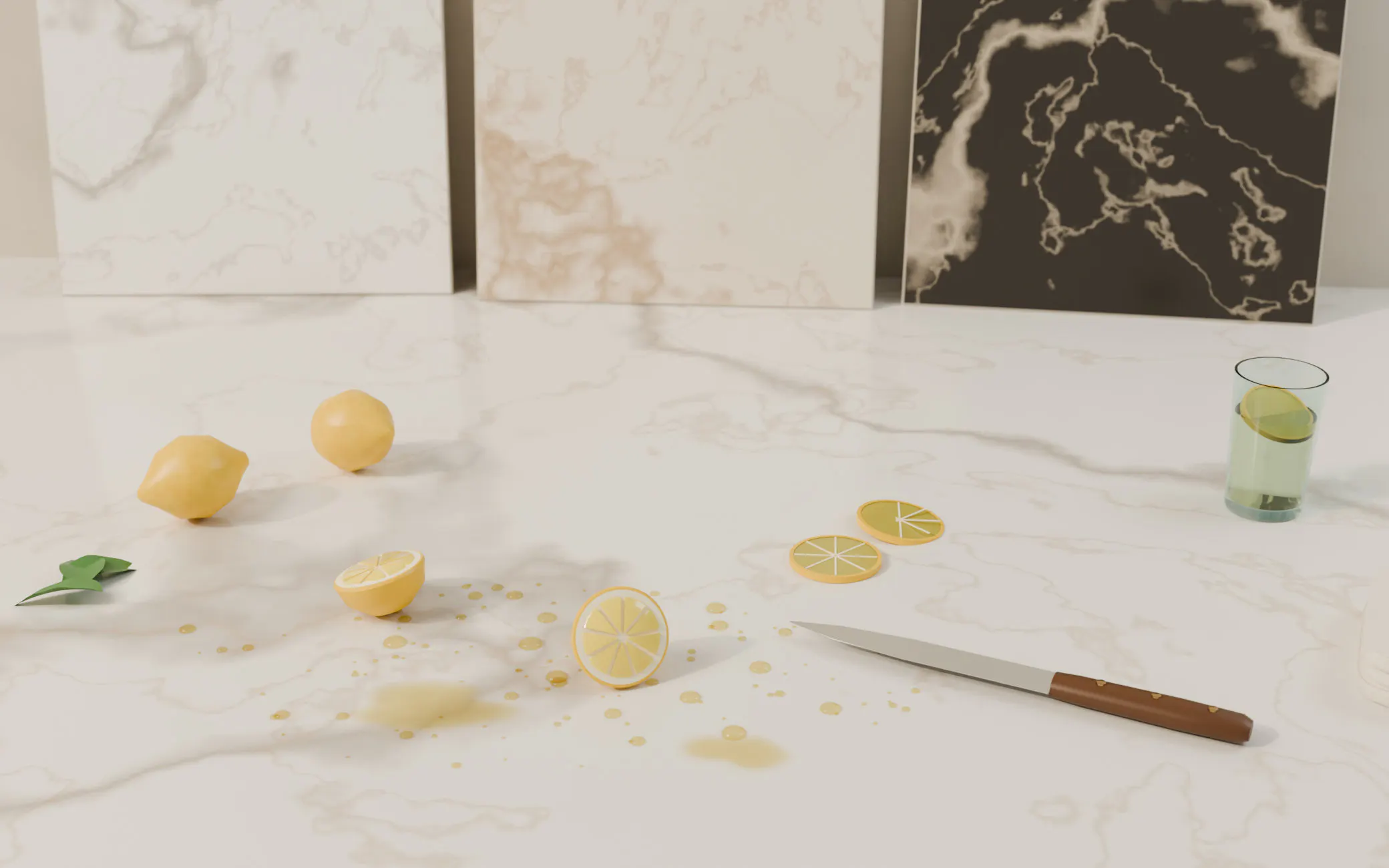
The Natural Stone Institute explains that marble is built from calcite, and calcite is attacked by mild acids, including ones common in kitchens. Lemon, vinegar and acid cleaners can dull or etch the surface. A light etch can be buffed out with marble polishing powder. A deeper one needs a restorer. That is simply what marble is, and many people love how it ages.
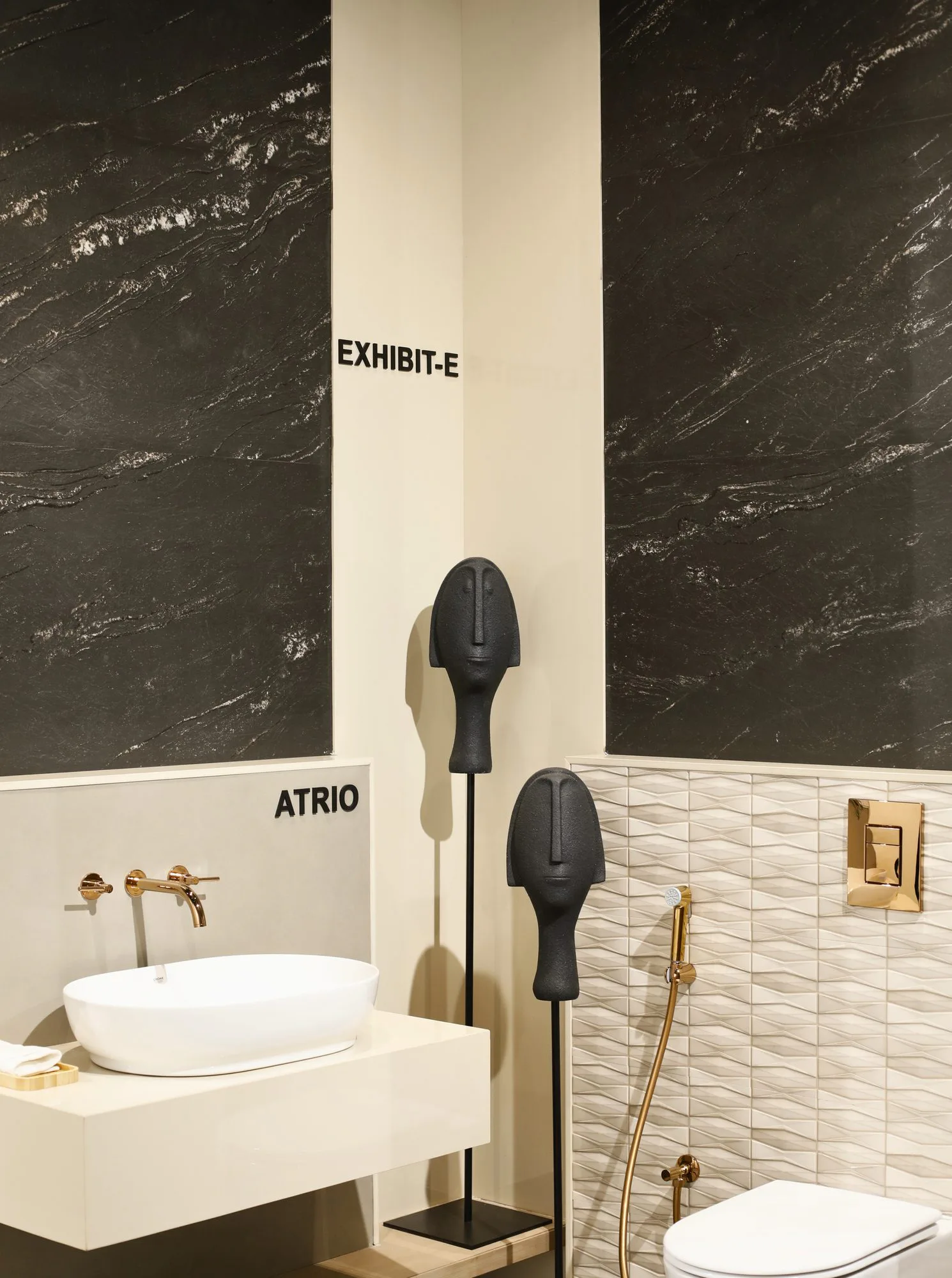
Dark marble-look porcelain behind a basin: water and soap wipe off.
What is marble-look porcelain?
A dense porcelain tile or slab whose surface carries a marble pattern. On glazed tiles the design is printed digitally and sealed under a thin glaze, a printed layer under 1 mm according to Orientbell. A dense porcelain soaks up 0.5% or less of its weight in water. Stain resistance is a separate test, so ask to see its result.
| Question | Real marble | Marble-look porcelain |
|---|---|---|
| Lemon, vinegar, cleaners | Can etch and dull | Not calcite, so no etching in the same way |
| Everyday care | Non-acidic cleaners, quick wiping | Wipes clean |
| The vein | Every slab is different | A printed vein that repeats |
| Over the years | Patina is part of the appeal | Looks as it did when new |
| Best where | A statement wall, a bath top | Floors, kitchens, bathrooms |
Marble behaviour is from the Natural Stone Institute. Porcelain figures are from the tile standard and the data sheet.
How do you judge a good vein?
Sample squares hide the repeat. A printed vein can look rich on one tile and flat when ten lie side by side. Ask for a full panel or several tiles laid together. Check that the veins vary from tile to tile, that the colour sits well beside your walls and furniture, and that the finish feels right.
- Polished shows the most depth and also the most marks.
- Satin and lappato give a soft sheen without the mirror.
- Matt and structured hide marks and grip better, which suits kitchens and bathrooms.
A slab of 1200 × 2400 mm or bigger lets the vein run across a whole wall or vanity with few joints. It needs a flat base and the right adhesive, covered in large tiles for a seamless floor.
See these at the showroom
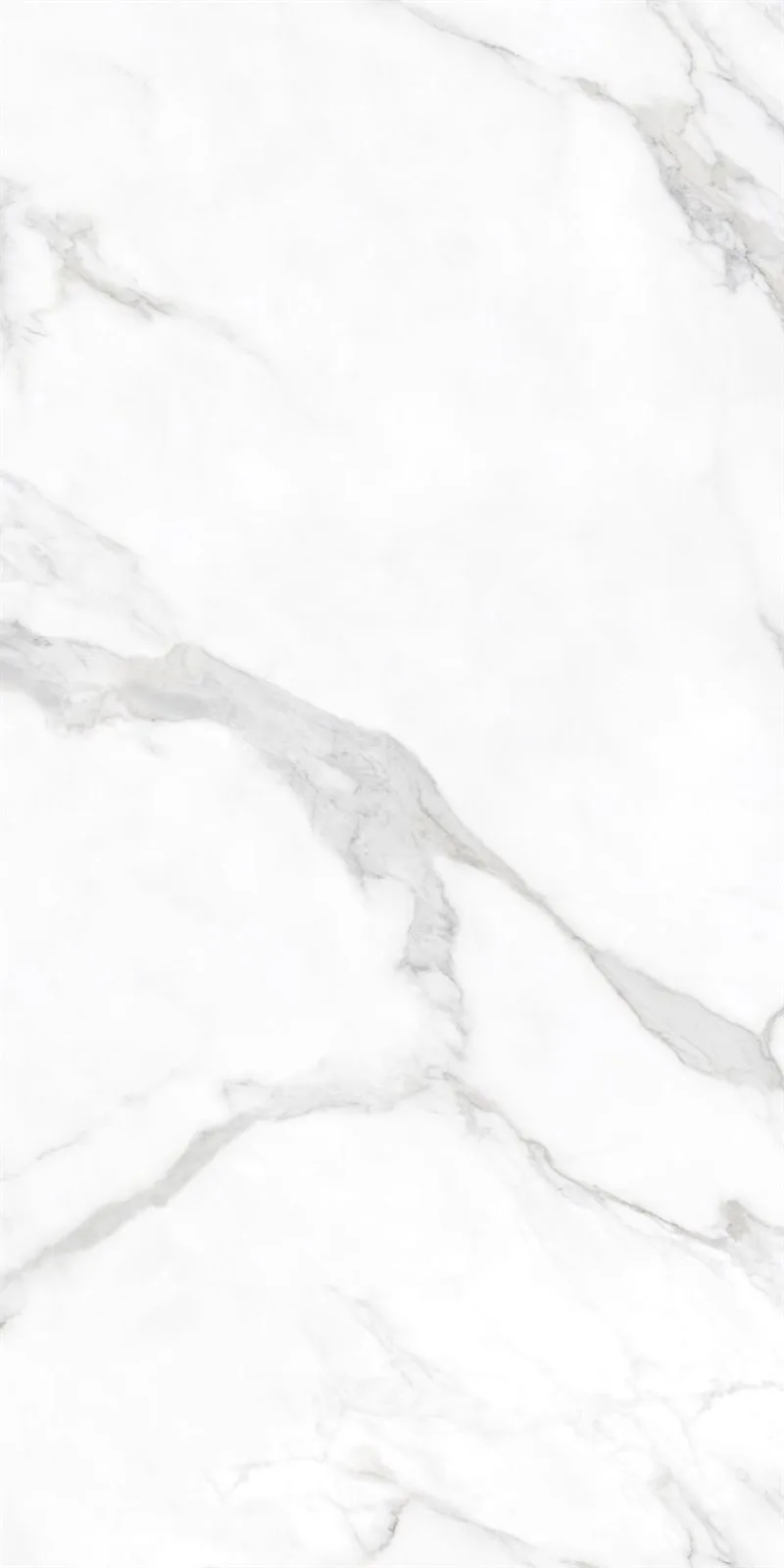 Lioli Statuario Venetian slab
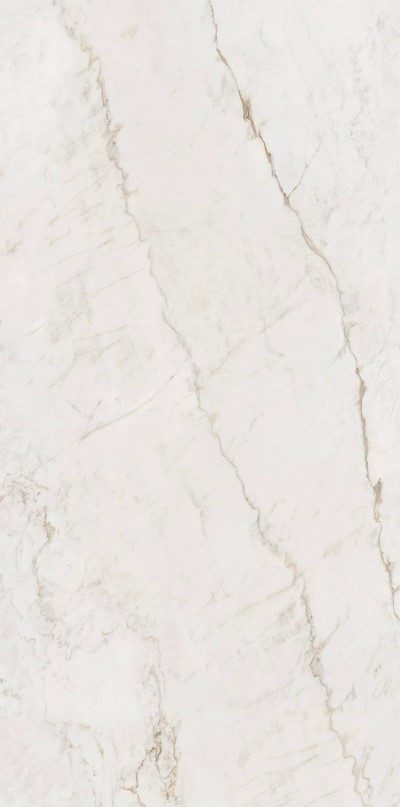 Marfil Persia
 Caesarstone 505 Archetta Silk 9MM
 Motto Perlato Gris: grey marble-look tile
Marble-look surfaces in the showroom: Lioli Statuario Venetian, Marfil Persia, Caesarstone 505 Archetta (porcelain) and Motto Perlato Gris.
Questions people ask
Is marble-look tile as good as real marble?
For daily living, often better, because it does not etch under lemon or vinegar the way marble does. Real marble is unique, though, and ages with a patina. Choose by how you live, not by which is more genuine.
Does marble-look porcelain stain?
A dense porcelain soaks up very little water, so spills do not sink in. Stain resistance has its own test, so ask for the result on the exact tile and finish.
Can I use real marble in a kitchen?
Yes, if you accept the care. Wipe acidic spills quickly, use non-acidic cleaners and expect some patina. If you would rather not plan for that, marble-look porcelain is easier.
Will the marble pattern repeat?
On porcelain, yes: the vein is printed and repeats across the collection. Look at a full panel, and mix tiles from the box when laying so the repeat does not show.