The short answer
Large tiles leave far fewer joints, so a floor looks like one piece and has less grout to scrub. To get it right, measure the way in first, make the floor flat, and ask for adhesive on both the floor and the back of every tile.
- 01A 1200 × 2400 mm slab leaves half the joint length of a 600 × 1200 mm tile.
- 02Large tiles show a bad floor. Get it flat before the tiler starts.
- 03Adhesive goes on the floor and on the back of the tile, so no hollow patches are left.
- 04Check the slab can pass your lift, stairs and door.
A big slab on a living room floor looks calm: few lines, one surface, the veining carrying on. It is also the hardest tile to lay well. If you plan for it, the floor gives you what the showroom promised.
What do you gain?
- 2.5 m
- of joint per m² with 600 × 1200 mm tilesWorked out from the tile size; each edge is shared by two tiles
- 1.25 m
- of joint per m² with 1200 × 2400 mm slabsWorked out from the tile size; each edge is shared by two tiles
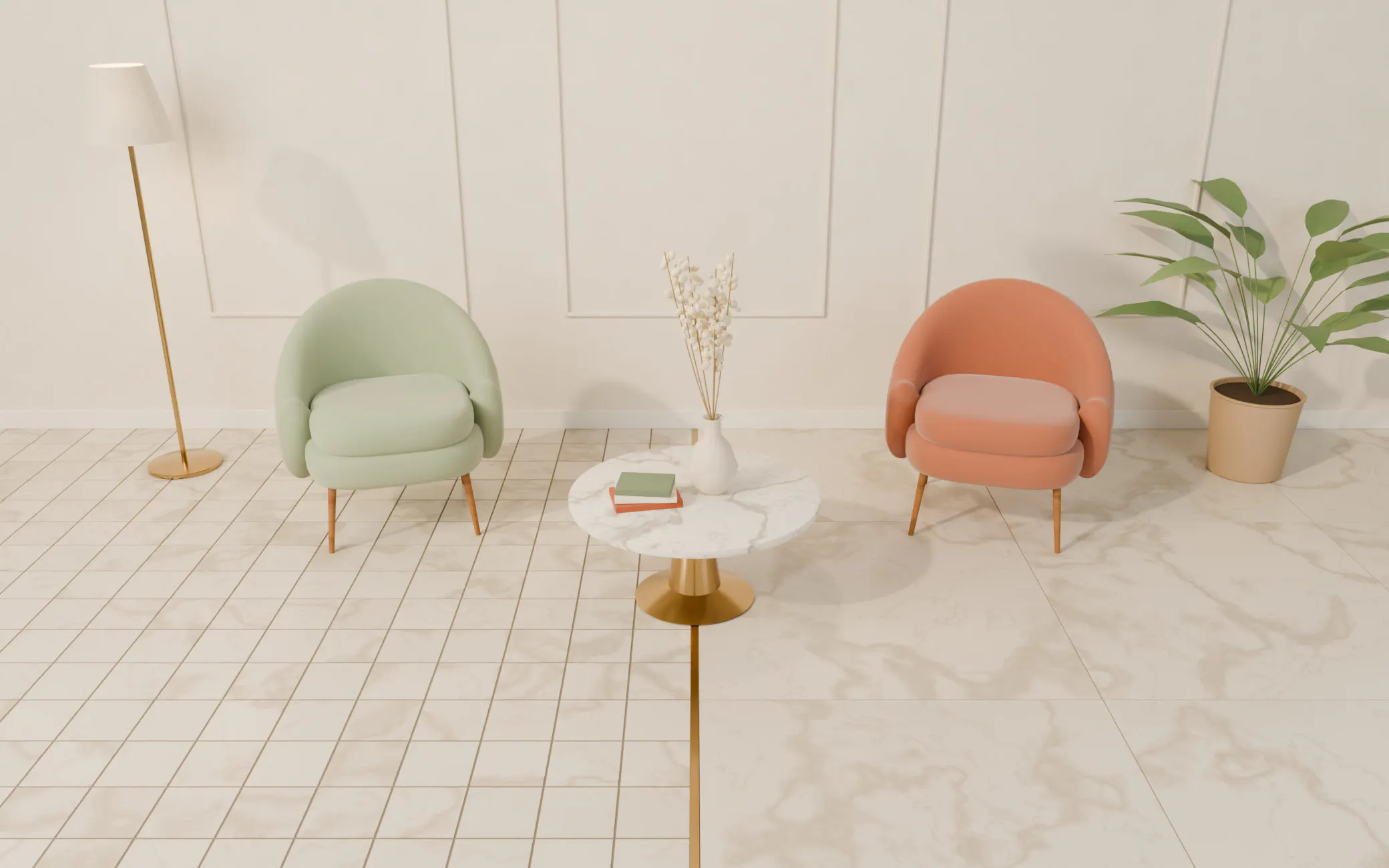
Half the joints means half the grout to stain and scrub, and a floor that reads as one piece. A rectified tile, cut square after firing, allows narrow joints.
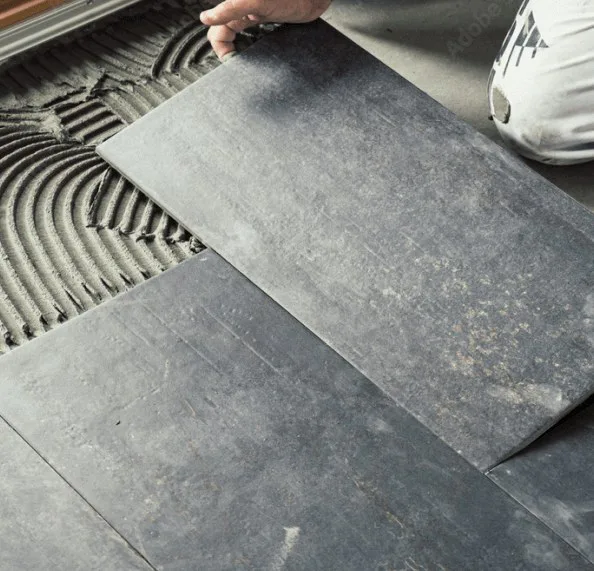
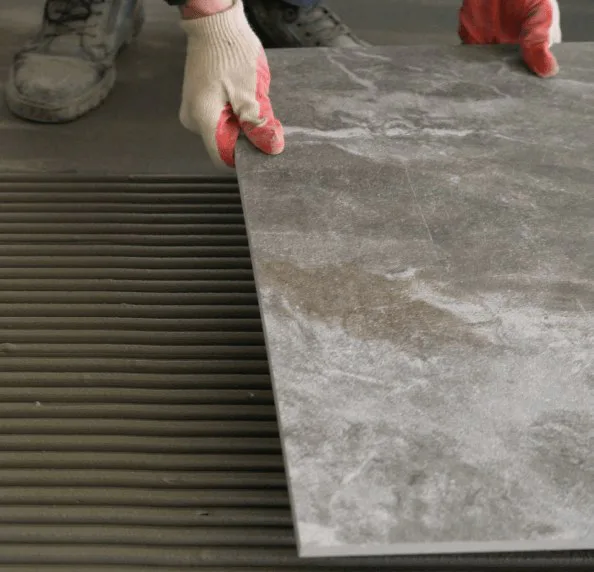
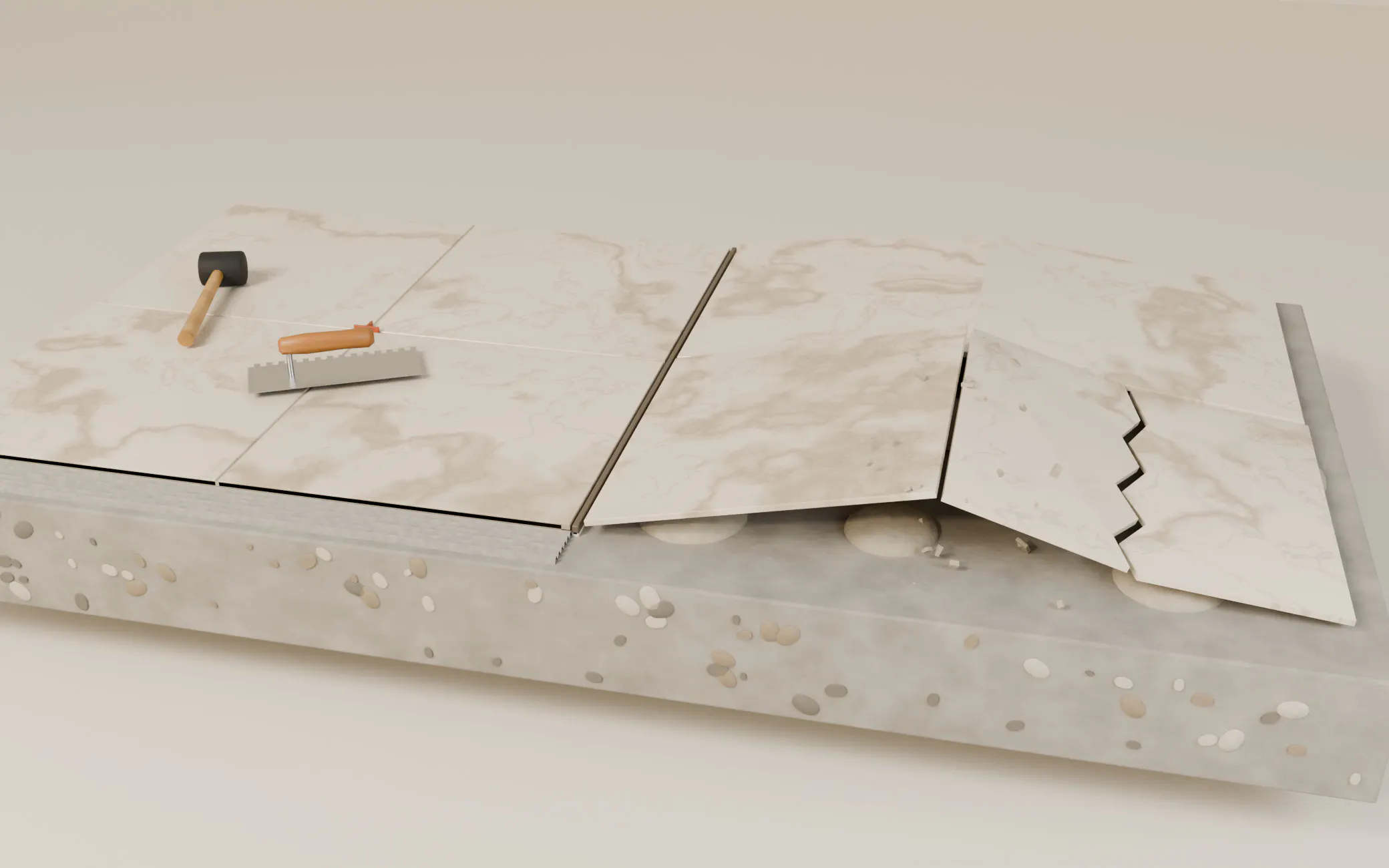
Large tiles need a full bed of adhesive and two people. Photo: MYK Laticrete.
Will it get into the house?
The long edge is 2400, 3000 or 3200 mm, and it has to clear the lift, the stair turns and the door. Measure the route before you choose the size, and ask who unloads, who carries and where the offcuts go. If the route cannot take your size, a smaller slab is a better plan than a broken big one.
What does the floor need?
A flat floor. A trade guide gives the limit as about 3 mm over 3 metres. Mapei says large-tile adhesives are not made to correct uneven floors, so grind the high spots and fill the low ones. A new screed must also be left to cure, because one that is still drying shrinks and can crack the tiles after they are laid.
How should the adhesive go on?
Mapei recommends a full bed, with adhesive combed on both the floor and the back of the tile, for tiles over 60 cm, thin tiles, areas with constant water and heavy traffic. A tile on a patchy bed sounds hollow and can crack at an unsupported edge. In a Surat summer, ask for an adhesive with a longer working time, so the first tiles do not dry before the last are placed. The guide on cracking and popping has more.
Which size should you pick?
For most flats, 800 × 1600 or 1200 × 1800 mm gives the big look with easier handling. Go to 1200 × 2400 mm where the plan is open and the lift can take it. Keep 1500 × 3000 and 1600 × 3200 mm for walls and features. Slabs come in 6, 9 and 12 mm. A thin slab is lighter but more fragile to handle. For long tiles, most makers advise offsetting each row by about a third, not half, to keep edges from showing steps.
See these at the showroom
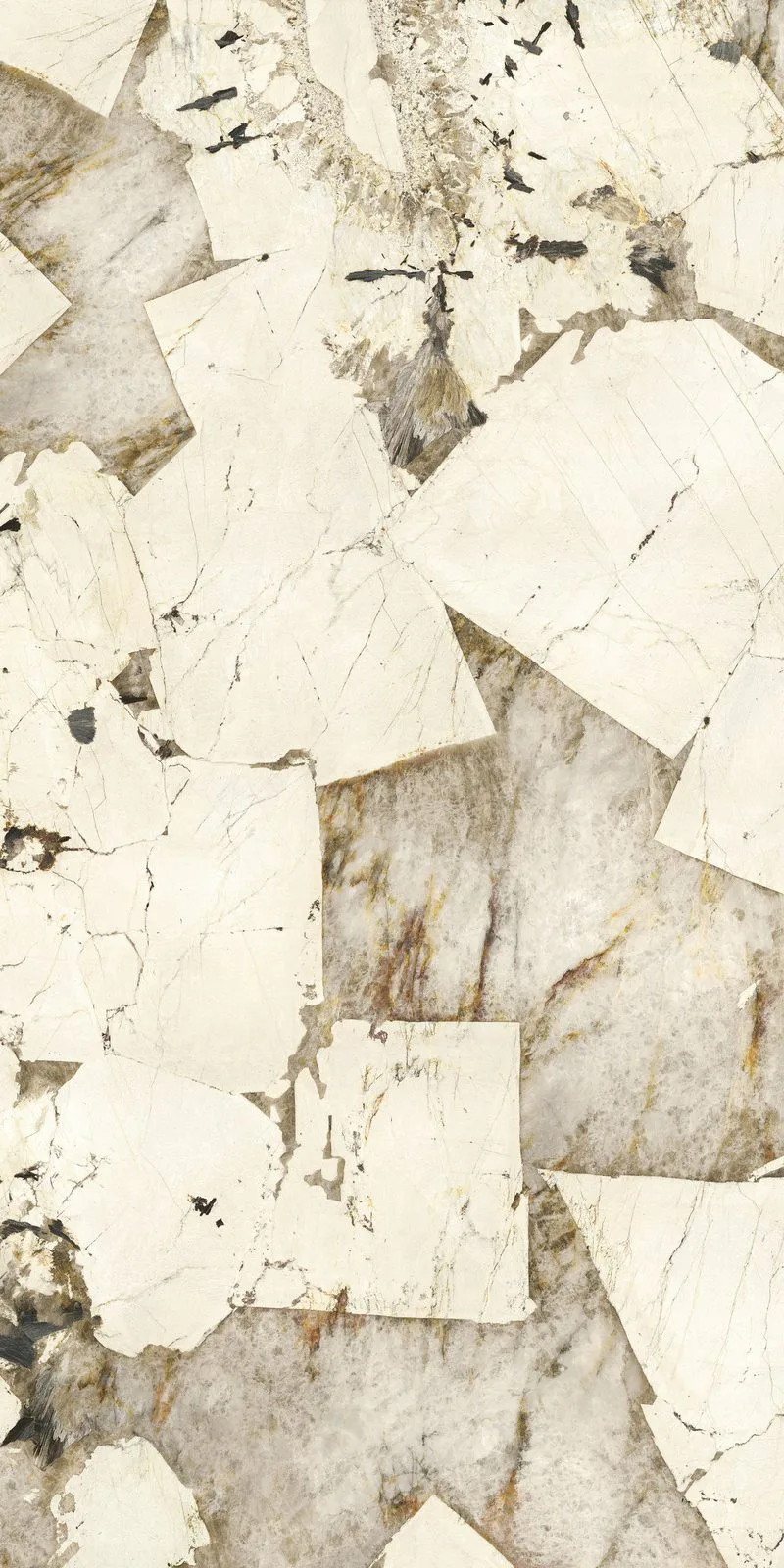 Iris FMG Maxfine Marmi Patagonia slab
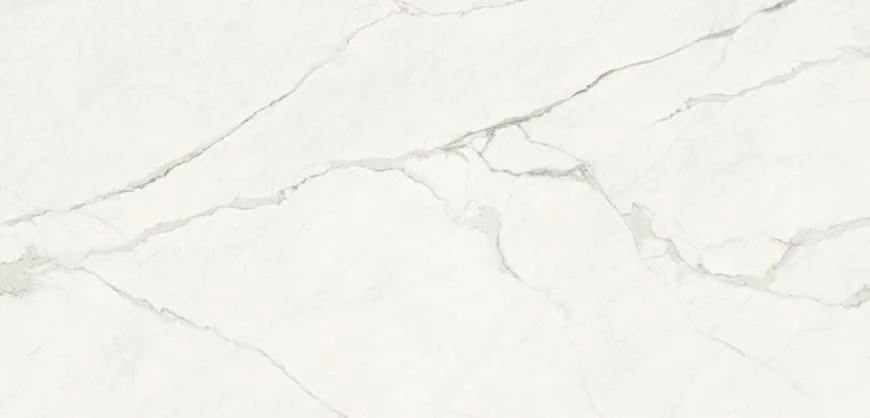 Caesarstone 503 Circa Honed
 Lavish Dax Soft
 Motto Murul Brown
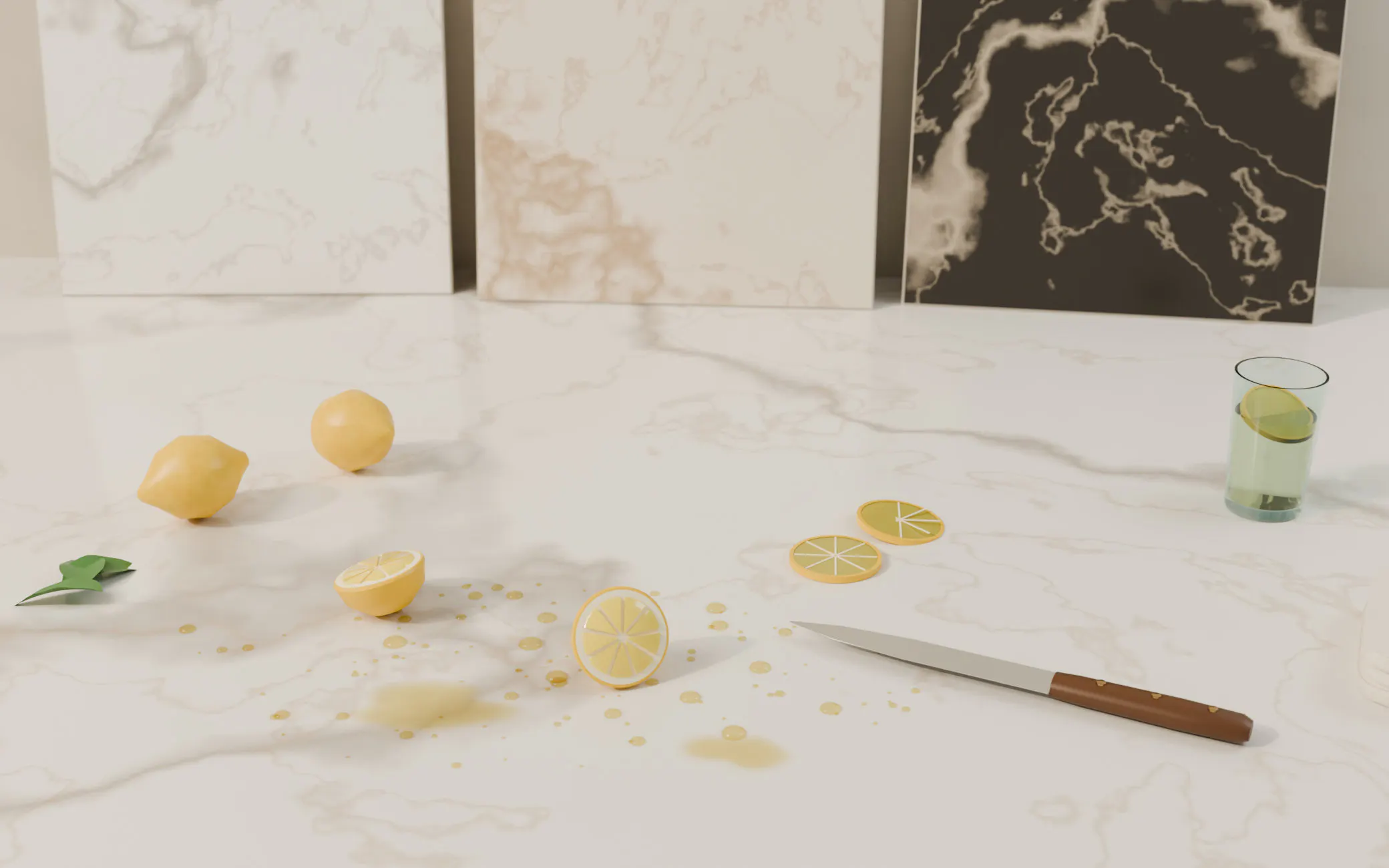
From large to very large: Iris FMG Maxfine Marmi Patagonia (1500 × 3000 mm), Caesarstone 503 Circa Honed (1600 × 3200 mm), Lavish Dax Soft (1200 × 1800 mm) and Motto Murul Brown (800 × 1600 mm).
Questions people ask
What counts as a large tile?
One trade guide counts any tile with a side over about 380 mm. In our showroom, large usually means 600 × 1200 mm and up, and a slab means 1200 × 2400 mm and above.
Do large tiles crack easily?
Size is rarely the cause. Hollow patches under the tile, an uneven floor or a floor still drying are the usual causes. Fix those before the tiles go down.
Which size is best for a flat?
800 × 1600 or 1200 × 1800 mm gives a large look without much trouble. Use 1200 × 2400 mm where the plan is open and the lift can carry it.
Do large tiles need a special adhesive?
They need an adhesive suited to their size, applied on both floor and tile back. Check the tile maker’s advice and the adhesive’s data sheet.
Sources
- Fine Homebuilding: large-format tiles (definition, flatness, clips, offset)
- Mapei: the correct distribution of adhesive and double buttering
- Mapei: tips for installing large-format and thin tiles
- Mapei: reasons why tiles buckle (screed curing)
- House of Ceramic: showroom slab range (sizes and thicknesses as listed)