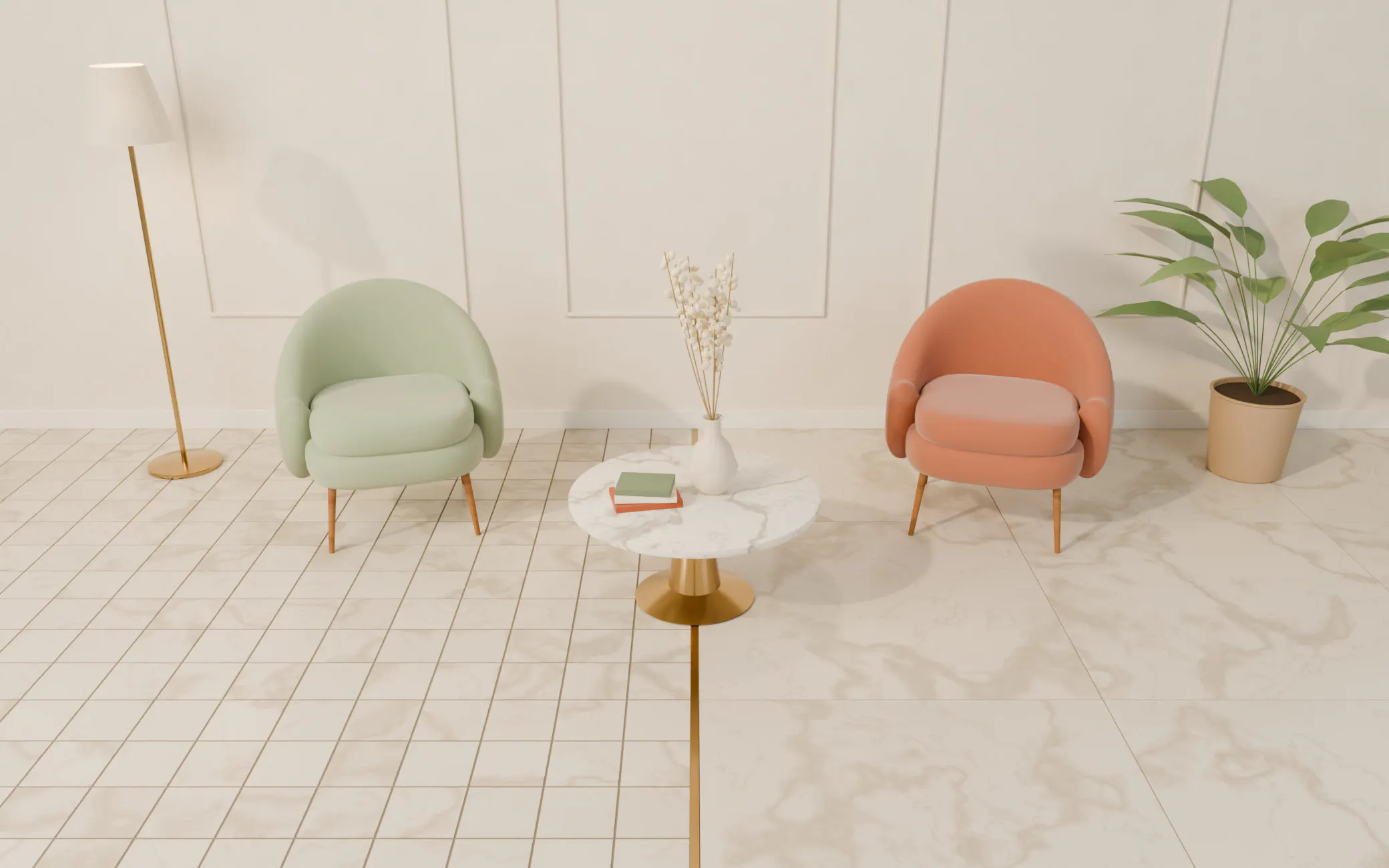
The short answer
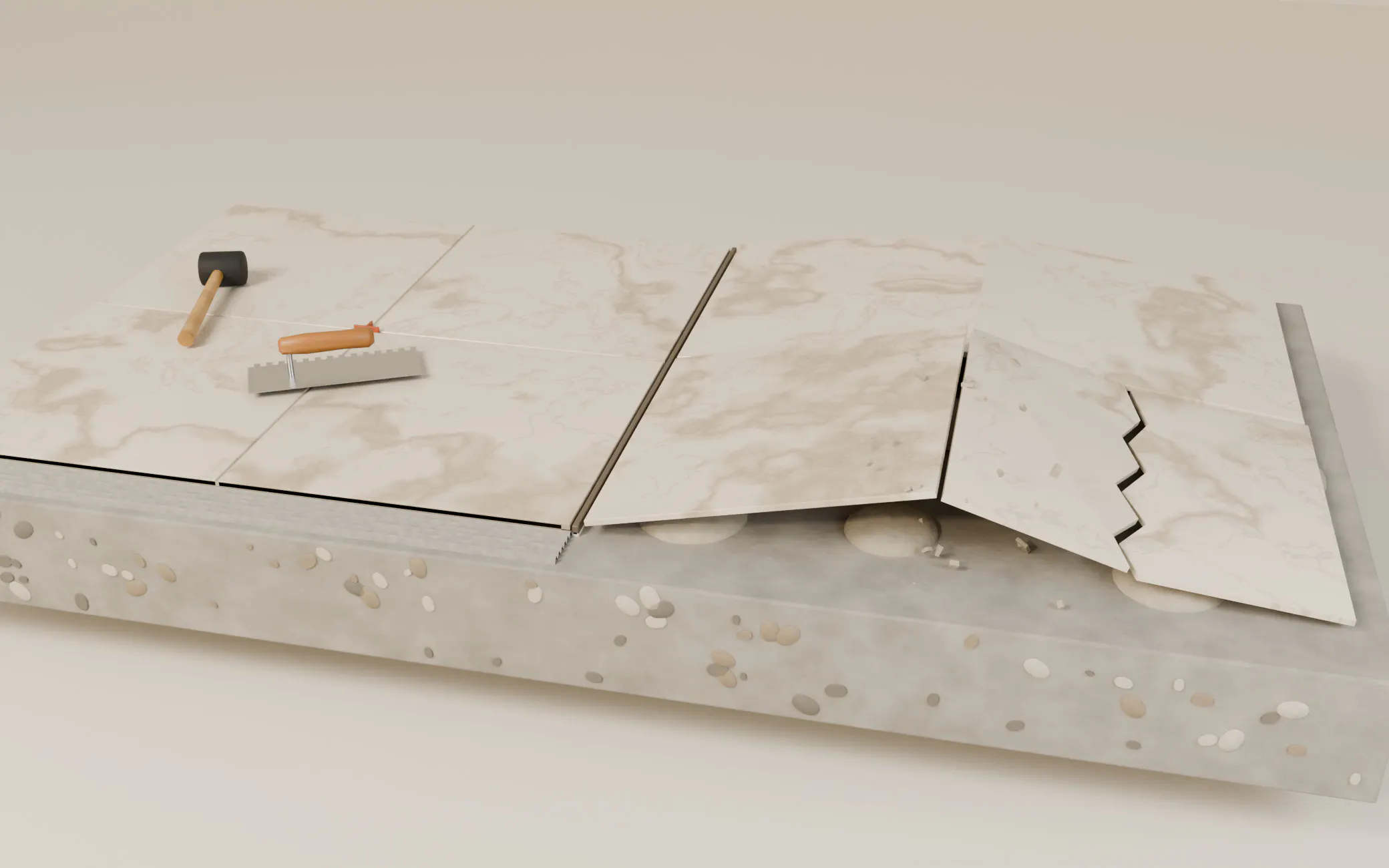
Tiles usually pop or crack because of what is under them: a patchy bed, a floor still moving, or no room for heat and damp to expand. Use tile adhesive instead of plain cement, spread it fully, keep movement joints, and let new floors cure first.
- 01The tile is rarely the problem. The bed, the base and the joints are.
- 02Dense tiles soak up 0.5% or less of their weight in water, so a plain cement bed has little to grip.
- 03Match the adhesive to the tile and the place. Balconies and large tiles need a flexible grade.
- 04Leave at least 3 mm joints and movement joints at the edges and across big floors.
A tile that pops up or sounds hollow is a heartbreak in a new flat, usually in the first hot spell or the first monsoon. The cause is almost always under the tile, and it is cheap to prevent before the floor goes down.
Why do tiles pop or crack?
Mapei names four common causes. Surat gives you the first one every year.
- The floor swells or shrinks faster than the tile when heat or humidity changes. With no gap to move into, the tile lifts.
- The base was not dry. A screed that has not cured is still shrinking, and cracks can appear after tiling.
- The adhesive does not suit the place. Where heat swings or the base flexes, Mapei recommends flexible adhesives.
- The joints are too tight. Mapei suggests at least 3 mm on floors.
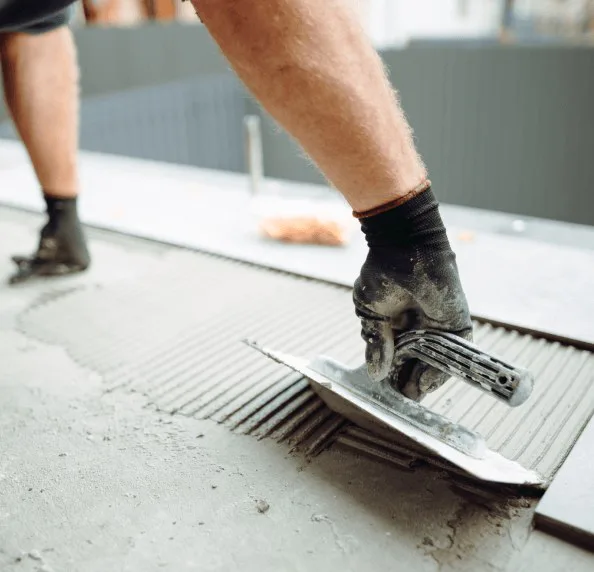
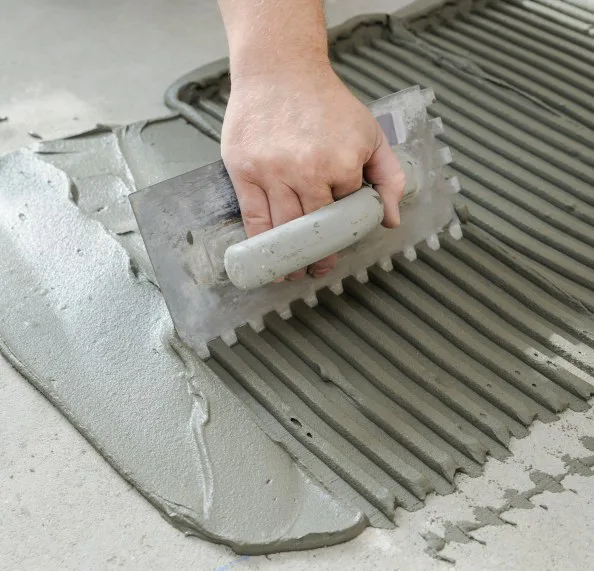
A full, combed bed with no gaps is what keeps a tile down. Photo: MYK Laticrete.
Why use tile adhesive instead of cement?
Cement mortar is sand and cement mixed on site. Tile adhesive is a factory-made powder with polymers added, mixed with water only. Dense tiles take in almost no water, so a plain cement bed has little to grip. MYK Laticrete says traditional methods are not up to modern tiles, and Sika says its wet-room adhesive bonds better than conventional cement mortar. Both sell adhesive, so weigh that, but the 0.5% water figure comes from a standard, not a sales line.
Which adhesive for which job?
| Where | Ask for |
|---|---|
| Bathrooms and wet rooms | SikaCeram-155 Wet Room, Roff Vitrofix, MYK Laticrete 315 Plus or 325 |
| Vitrified tiles, indoor floors and walls | Roff Vitrofix, MYK Laticrete 325 or 335, SikaCeram-155 |
| Large and thin tiles | SikaCeram-255 or 288, Roff Vitrofix Ultra, MYK Laticrete 325 or 335 |
| Balconies and outdoor floors | A flexible grade: Roff Extrofix, MYK Laticrete 335, SikaCeram-288 |
| Heavy stone slabs | A thick-bed stone adhesive such as MYK Laticrete 320 |
From the makers’ data sheets and selectors. The tile maker’s advice and the adhesive’s data sheet decide.
NioPro is the premium range sold with Roff, in five grades from 1000 to 5000. The first three are standard adhesives for floors and walls. 4000 and 5000 are the flexible grades, and 5000 flexes most, made for heat swings and vibration. NioPro’s data sheets give 2.5 to 3 m² per 20 kg bag at 6 mm, and say to grout after 24 hours on walls and 48 hours on floors.
What to tell your tiler
Name the tile and the room
So the adhesive matches both.
Let new screed cure
Do not tile over a base that is still drying.
Spread a full bed
Mapei advises adhesive on the floor and the back of the tile for large tiles, thin tiles, wet areas and heavy traffic.
Leave room to move
Joints of at least 3 mm, plus movement joints at the edges and across big areas.
Wait before grouting and walking
Follow the times on the bag.
See the shelves at the showroom, or read the adhesives page. Our guide to large tiles covers the bigger sizes.
See these at the showroom
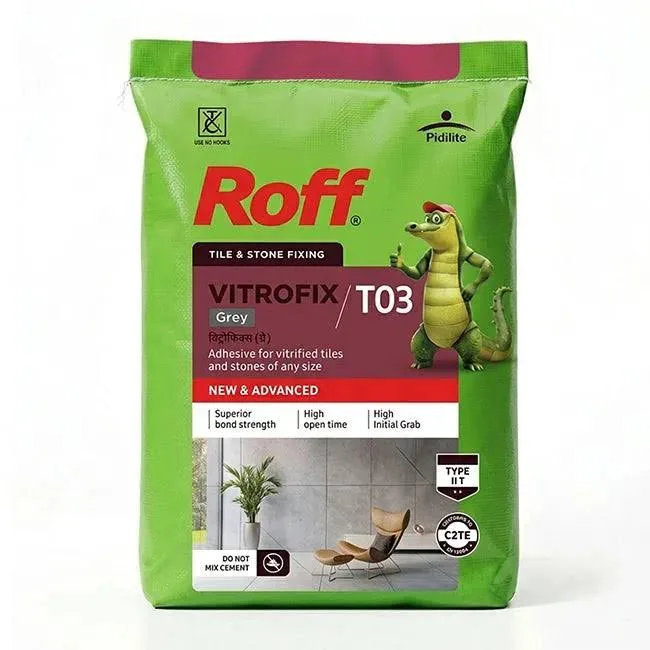 Roff. Roff. T03 - Grey 30KG
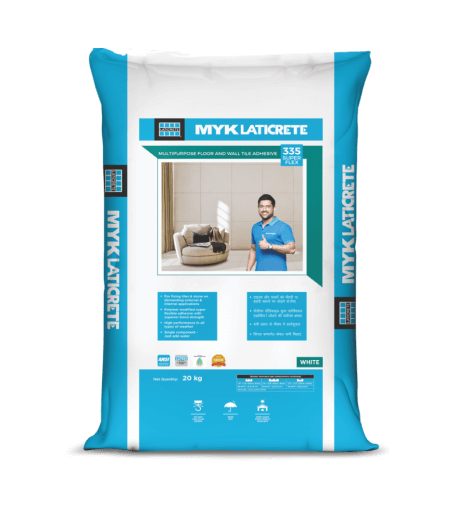 MYK Laticrete 335 Super Flex tile adhesive
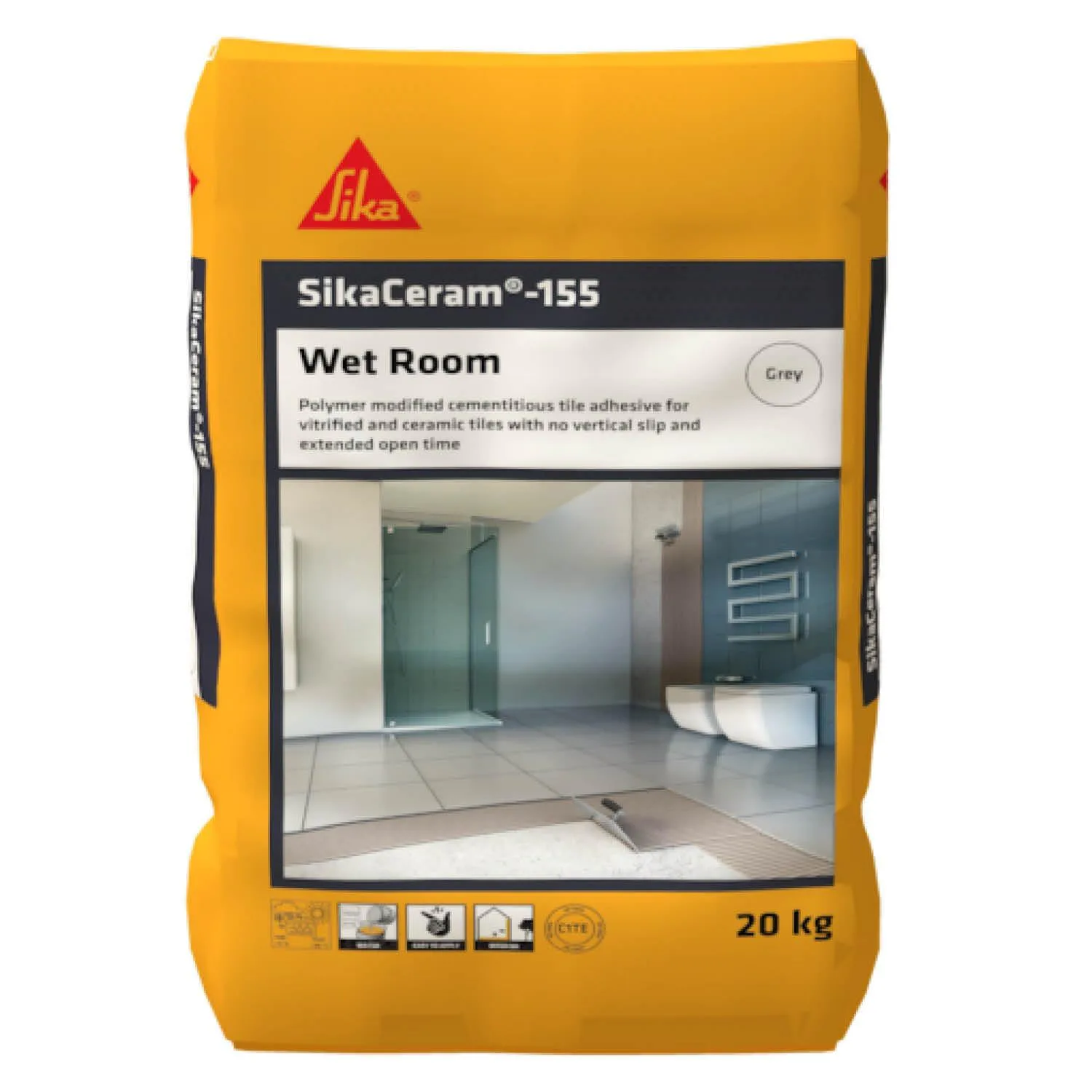 Sika SIKA-155 Grey 20KG
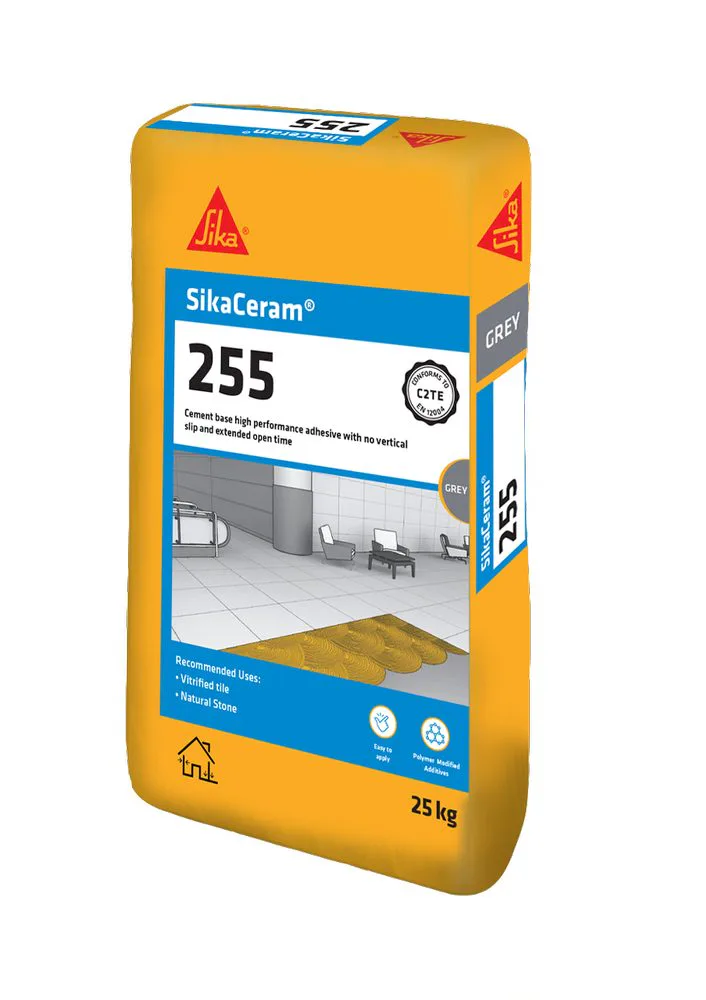 SikaCeram-255 tile adhesive
Four adhesives we stock: Roff T03 Vitrofix, MYK Laticrete 335 Super Flex, SikaCeram-155 Wet Room and SikaCeram-255.
Questions people ask
Can I use cement instead of tile adhesive?
It is the traditional method and suits tiles that soak up water, like many wall tiles. Dense tiles give cement little to grip, so adhesive is the safer choice. A polymer additive in the cement, such as Roff Tile Bonder, sits in between.
Why does my tile sound hollow?
The tile has lost contact with its bed in that spot, often because adhesive was spread in patches. A full bed on the floor and the tile back prevents it. Ask your tiler to tap-test the floor before grouting.
Which is better, Roff, NioPro, MYK Laticrete or Sika?
Each makes grades for different jobs, so the match matters more than the name. Tell us the tile size and the place, and we will go through the data sheets with you.
Do I need a special adhesive in the bathroom?
Choose one made for wet rooms, such as SikaCeram-155 Wet Room, and put waterproofing under it first. The adhesive is not a substitute for the waterproofing layer.