The short answer
Use dense porcelain with a wear rating that matches the footfall and a grip rating wherever it gets wet. Go matt at entrances and in kitchens, and polish only where it stays dry. Large slabs leave fewer joints to clean. Ask for the numbers in writing.
- 01A commercial floor must look right in year three, not only on opening day.
- 02Match the wear rating to the traffic: moderate for offices, heavy for shops, restaurants and lobbies.
- 03Put the grippiest tile at the entrance, because wet shoes arrive there every monsoon day.
- 04A finish name is not a grip rating. Ask for the rating in writing.
A shop floor takes more feet, hard soles, trolleys and mopping than any home, and customers see it all. The floor has to look right in year three. Here is what to pick for each space, and what to ask for.
What does each space need?
| Space | What it faces | Look at |
|---|---|---|
| Shop or showroom | Scuffs, trolleys, bright lights | High wear rating, satin or matt, large slabs for fewer lines |
| Office | Moderate footfall, easy cleaning | Moderate wear rating, any finish |
| Restaurant dining | Spills, grease, mopping | Matt or lappato with a wet grip rating |
| Entrance and lobby | Wet shoes in July | Matt or lappato with a tested wet rating |
| Corridors and workshops | Heavy wear | Through-body tile, colour all the way through |
Tile makers suggest matt or lappato for frequently walked areas. Your architect checks fire and safety rules for each project.
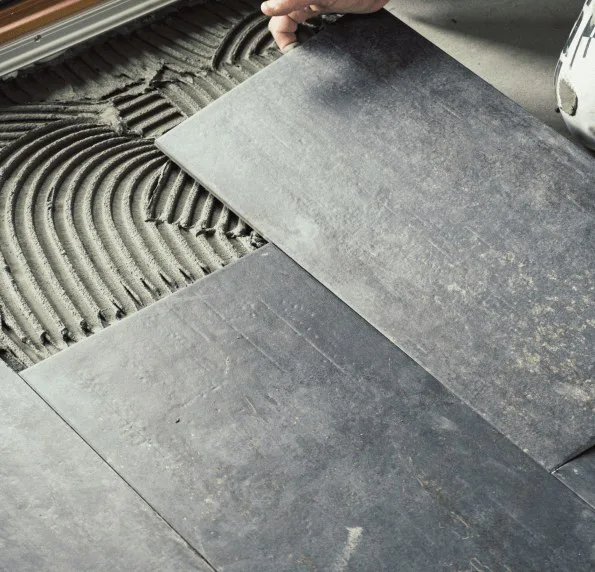
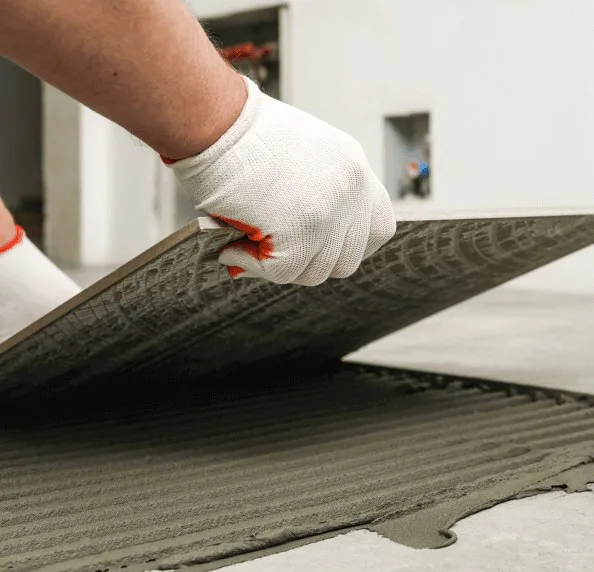
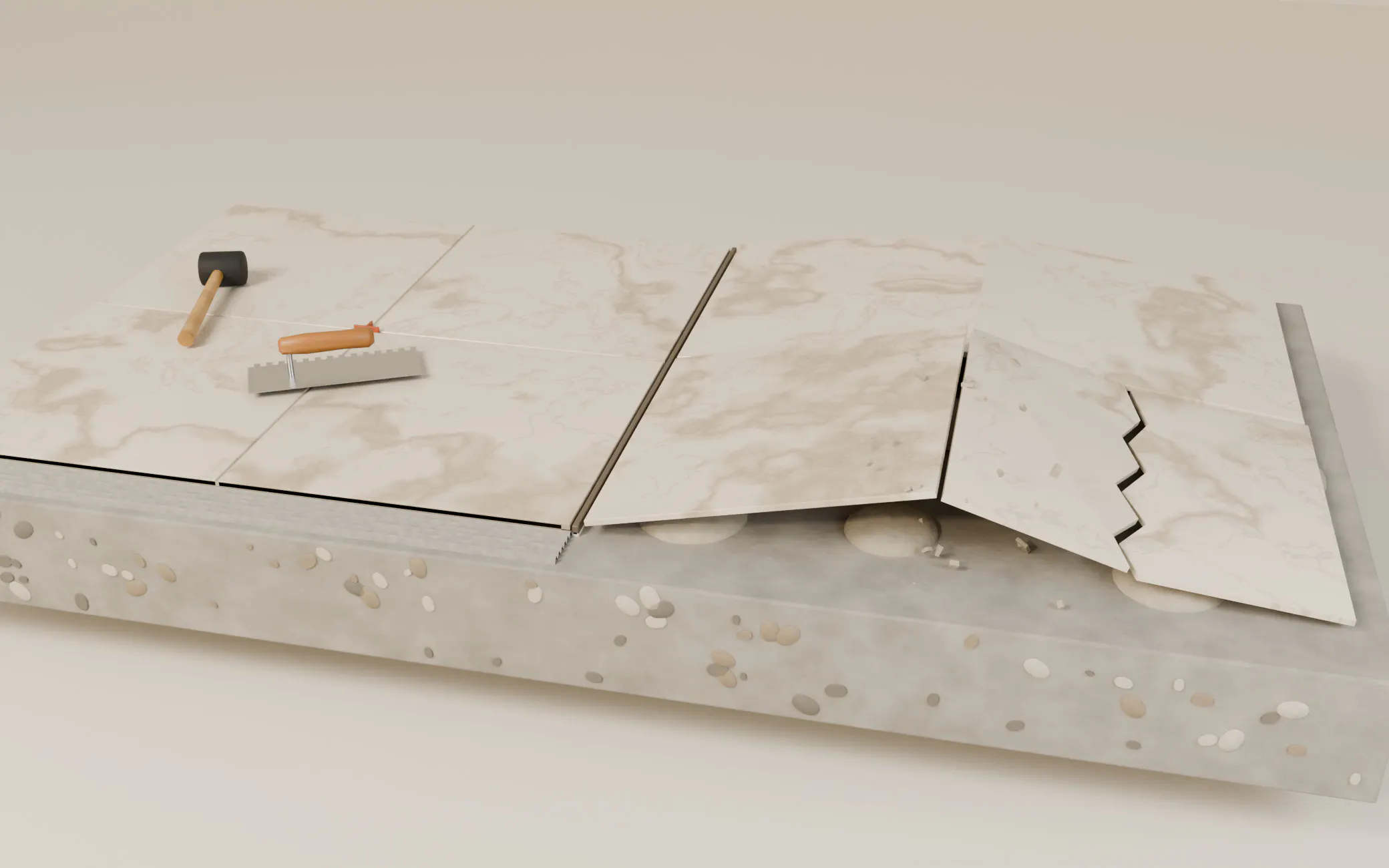
Shops and offices need a flexible adhesive as much as a hard tile. Photo: MYK Laticrete.
Which wear rating do you need?
Glazed tiles get a wear class from 0 to 5, called PEI. Suppliers describe PEI 3 as moderate traffic such as an office, PEI 4 as heavy home use and light commercial, and PEI 5 as heavy foot traffic with abrasive dirt over long periods. Shops, restaurants and lobbies are PEI 4 or 5. Through-body tiles are unglazed and carry colour all the way through, so wear shows less. Ask the maker for the rating of your exact finish.
How do you handle wet floors in the monsoon?
Wet shoes and umbrellas reach the first floor everyone crosses. Put the grippiest tile at the entrance even if the lobby behind it is polished. Matt or lappato at the door and polish beyond is a common way to get both. Two tiles can both be called matt and grip very differently, so ask for the grip rating in writing for any wet area.
Polished, satin or matt?
Polished gives the brightest look and shows dust, dirt and fluff easily, and it is the first to show scratches. Satin hides fingerprints. Matt and lappato hide dirt and grip better, so they are the working choice for dining rooms, hallways and entrances.
Are large slabs worth it in a shop?
A 1200 × 2400 mm slab has about 1.25 m of joint per square metre, against 2.5 m for a 600 × 1200 mm tile, so there is less grout to stain and clean. Large slabs need a flat floor and a fitter who has handled them. For heavy traffic and constant water, Mapei advises a full bed of adhesive. Read large tiles and stopping tiles from popping before you fix a date.
How to specify the floor
List the spaces
Note the footfall, and which areas get wet or greasy.
Get the numbers in writing
Water absorption, wear rating and grip rating for the exact tile and finish.
See a full panel
Look at it in the showroom light and near a window.
Agree adhesive and joints
Settle both with the fitter before the order.
See these at the showroom
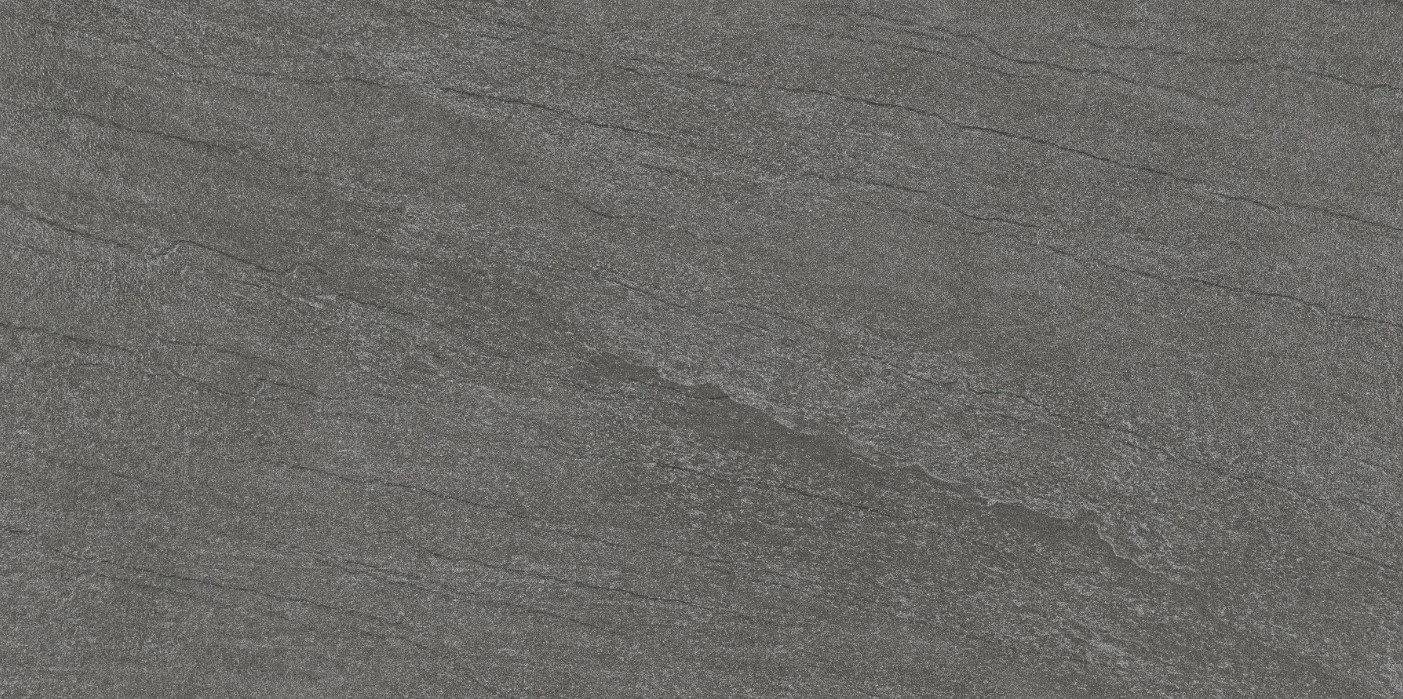 Marfil Brave Graphite
 Motto Clash Vaio - Matt
 Marfil Pearl Basic Silver tile
 Lavish Prive Crete
Matt, working surfaces from the showroom: Marfil Brave Graphite, Motto Clash Vaio, Marfil Pearl Basic Silver and Lavish Prive Crete.
Questions people ask
Which tile is best for a shop floor?
A dense porcelain tile with a high wear rating, PEI 4 or 5 if glazed, in satin or matt. Ask for the water absorption, wear and grip figures in writing for the exact finish.
Should a restaurant floor be matt or polished?
Matt or lappato in the dining room and kitchen, because of spills and grease. Polish only where the floor stays dry. Always ask for a tested grip rating.
What does PEI mean on a tile?
It is a wear class from 0 to 5 for glazed tiles. PEI 3 suits moderate traffic such as offices, and PEI 4 or 5 suits shops, restaurants and lobbies.
Are large tiles good for a shop?
Yes, they leave fewer joints to clean and give a continuous look. They need a flat floor, the right adhesive and a fitter used to large formats.
Sources
- ArchiPro: what PEI in tile ratings means
- Baukobox: abrasion class according to ISO 10545-7
- MDC Mosaics and Tiles: all floor tile finishes
- Tile and Stone Journal: polished and satin finishes
- Mapei: adhesive distribution and double buttering
- Joint length: worked out from tile size, each edge shared by two tiles