
The short answer
Surat’s 1991 to 2020 average is 1,243 mm of rain a year, and 1,191 mm of it falls from June to September. Before it starts, clear the floor drain, check grout and sealant, test the exhaust fan, and empty any container holding still water.
- 01About 96% of Surat’s yearly rain falls in four months, and July alone brings 466 mm.
- 02Do the checks in May, when it is dry and a fixer has time.
- 03Keep indoor humidity below 60%, ideally 30 to 50%, by running the fan during and after a bath.
millimetres of rain
- May2.4 mm
- June255.9 mm
- July466.3 mmthe wettest month
- August281.7 mm
- September186.7 mm
- October40.7 mm
- November to April together9.6 mm1.1 + 5.1 + 1.9 + 0.3 + 0.7 + 0.5
Source: India Meteorological Department 1991 to 2020 normals for Surat, as shown in the Surat climate table on Wikipedia. We could not open the IMD table itself, so check it before quoting these figures. June to September: 255.9 + 466.3 + 281.7 + 186.7 = 1,190.6 mm, which is 95.8% of 1,243.4 mm.
A bathroom that was fine in April has four months of damp ahead. If something is going to fail, the rain finds it. Do these six checks in May.
Pour a bucket down the floor drain
Use a 10-litre bucket. Water should leave steadily, with no pool around the grating. If it is slow, lift the grating and clear the hair and soap.
Look at grout and sealant
Check where the wall meets the floor, round the shower tray and around taps. Cracked grout or black, lifting sealant lets water behind the tile.
Test the exhaust fan
Hold a tissue to the grille. It should stick. Run the fan during the bath and for a while after.
Empty anything holding still water
Buckets, drums, plant trays. The dengue mosquito lays its eggs in water-filled containers in and around homes.
Look for stains on shared walls
Damp patches, peeling paint or white powder on the ceiling or the wall beside the bathroom point to a slow leak.
Check the floor underfoot
A wet tile is slippery and the monsoon means wet feet all day. Keep a mat outside the shower and ask us about anti-skid tiles.
Is the waterproofing the problem?
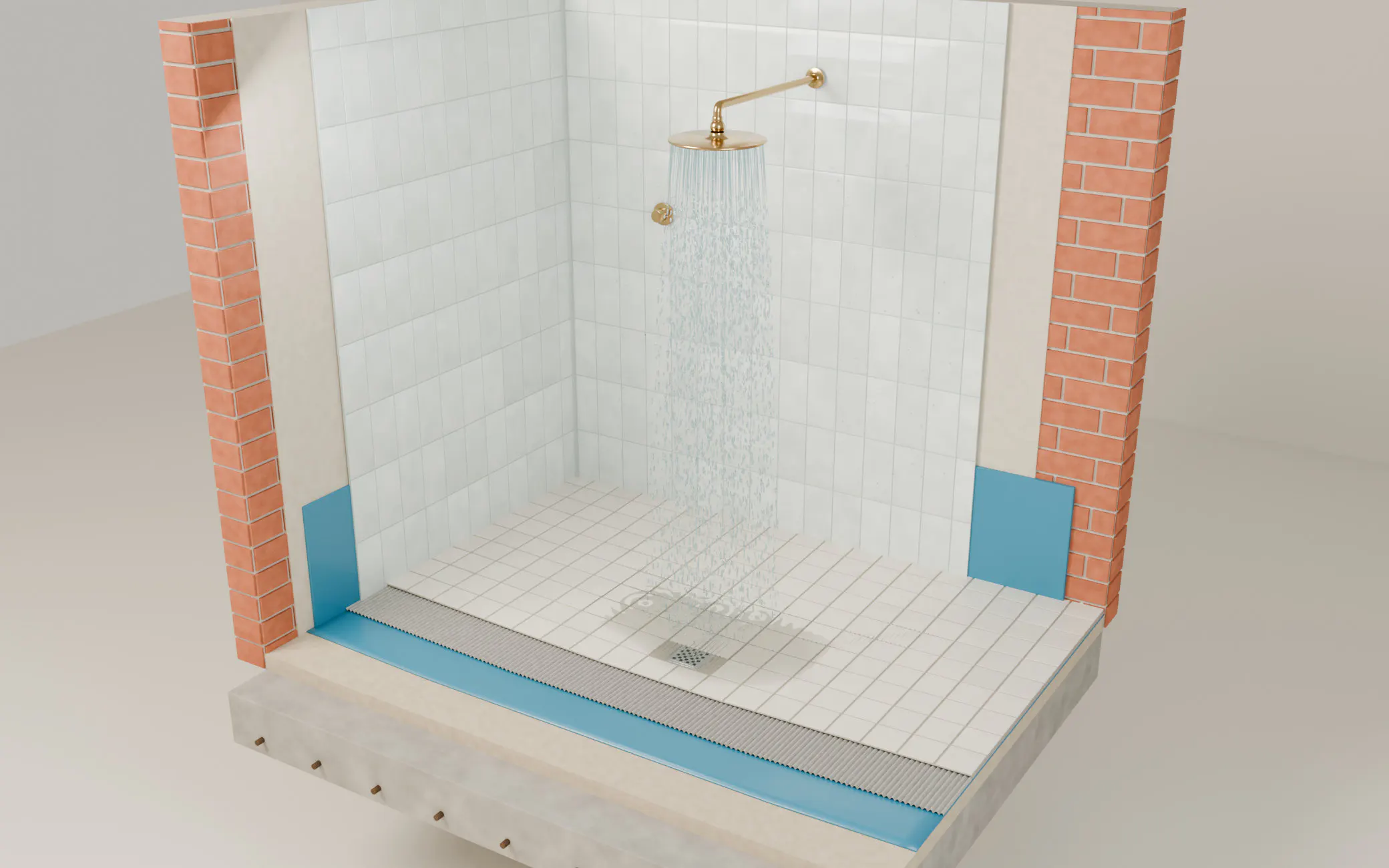
You cannot see waterproofing, because it sits under the tile. Makers check it by flooding the floor: the MYK Laticrete Hydro Ban sheet allows a flood test about 24 hours after it is applied. If your bathroom leaks every monsoon, ask how the layer was tested. Our leak-free bathroom guide explains the layers.


Two jobs to finish before June: the coating under the tile, and clean joints above it. Photo: MYK Laticrete.
See these at the showroom
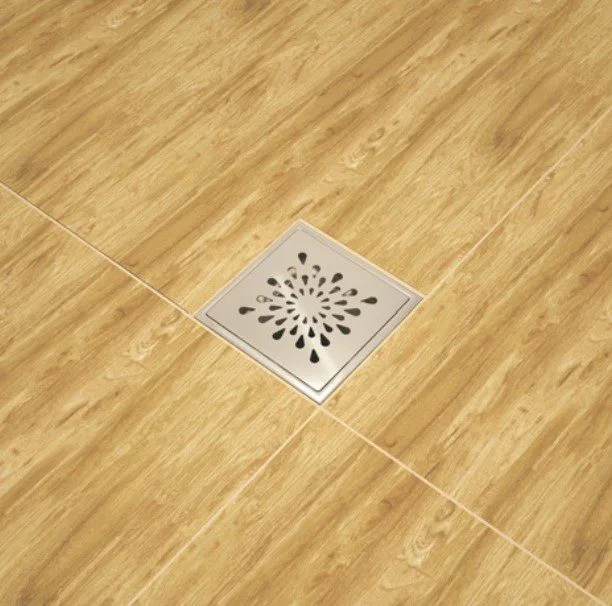 Faldu Drop floor drain 807
 Faldu 810 floor drainer
Two Faldu floor drains in the showroom, the Drop 807 and the 810. A drain with a removable grating is the easiest to keep clear.
Questions people ask
How much rain does Surat get in a year?
The 1991 to 2020 average is 1,243.4 mm a year. June to September brings 1,190.6 mm, about 96%, and July is the wettest at 466.3 mm. The figures come from the Surat climate table citing the IMD.
Why does my bathroom leak only in the monsoon?
Rain keeps walls and slabs soaked for weeks, so a crack, a failed grout line or a weak waterproof layer that stays hidden in dry months starts to show. Flood testing, not looking, is how waterproofing is checked.
How do I stop mould in the bathroom during the rains?
Control moisture. The US EPA advises keeping indoor humidity below 60%, ideally 30 to 50%, and running exhaust fans while bathing. Dry the floor and fix any slow leak early.
Sources
- India Meteorological Department 1991 to 2020 normals for Surat, as shown in the Surat climate table (monthly and yearly rainfall)
- US EPA: Mold course, chapter 2 (indoor humidity below 60%, ideally 30 to 50%)
- WHO: Dengue and severe dengue (eggs laid in water-filled containers in and around homes)
- LATICRETE Hydro Ban data sheet (flood test about 24 hours after application, longer in cool or humid weather)