The short answer
Measure the floor in square metres, add 10% for cuts and breakage, divide by the area of one tile and round up to whole boxes. A 4 m by 5 m room in 600 × 1200 mm tiles needs 22 m², which is 31 tiles, or 16 boxes of two.
- 01The sum: floor area × 1.10, then divided by one tile’s area, then rounded up.
- 02Add more for diagonal and herringbone layouts, and for rooms with many corners.
- 03Buy everything from one batch, and keep a few spare tiles in a dry place.
| Step | Sum | Result |
|---|---|---|
| Floor area | 4 × 5 | 20 m² |
| Add 10% for cuts and breakage | 20 × 1.10 | 22 m² |
| Area of one tile | 0.6 × 1.2 | 0.72 m² |
| Number of tiles | 22 ÷ 0.72 = 30.6 | 31 tiles |
| Number of boxes, if a box holds 2 tiles (1.44 m²) | 22 ÷ 1.44 = 15.3 | 16 boxes |
A box of two is only an example. Check the square metres printed on your box, and always round up. Sixteen boxes is 32 tiles, 23.04 m².
How much extra for other layouts?
| Layout | Usual extra | Why |
|---|---|---|
| Straight grid | 10% (some say 5 to 10%) | Cuts happen at the walls only |
| Diagonal | About 15% | Every tile at a wall is cut at an angle |
| Herringbone | 15 to 20% | Each plank at the edge is cut, and the pattern must match |
These are guide figures from retailer and installer pages. We found no tile maker or standards body that publishes one, so ask your fixer, who knows your room.
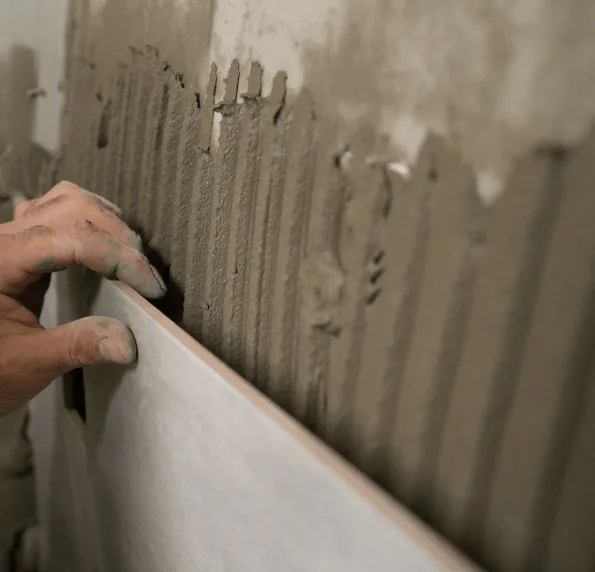
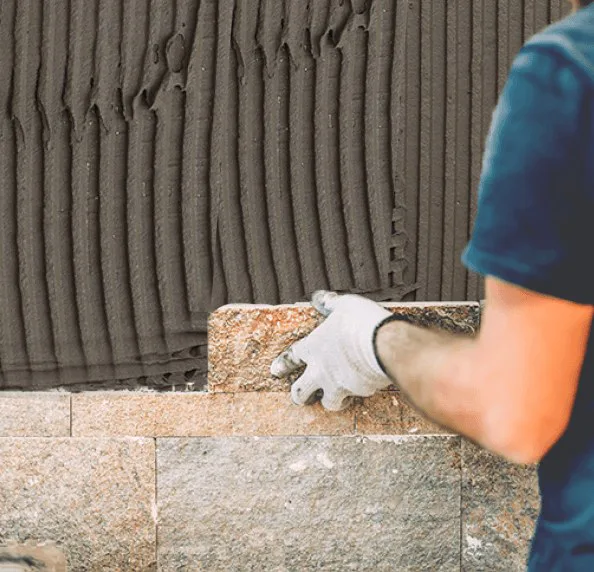
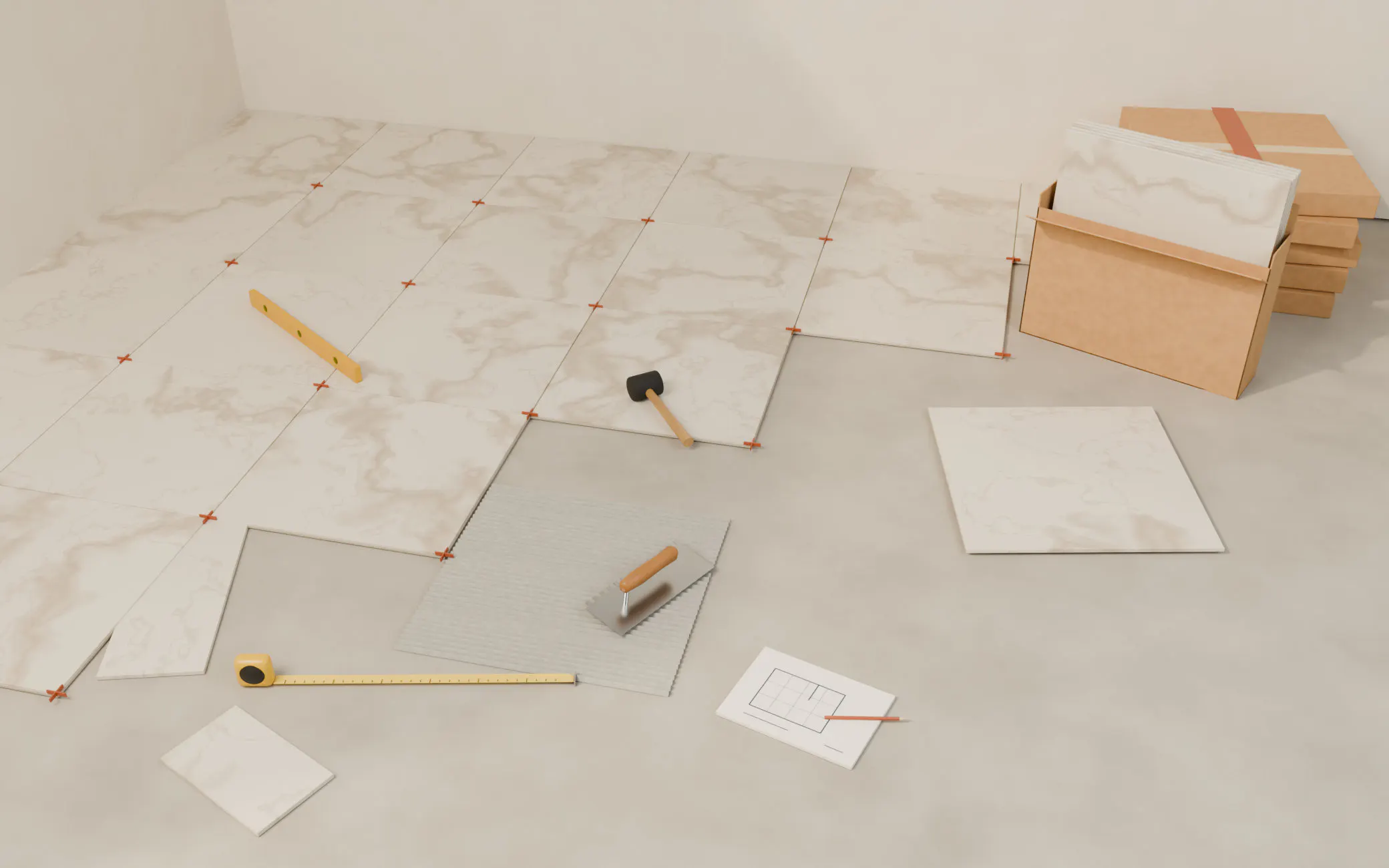
Every wall ends in a cut piece. That is where the extra ten per cent goes. Photo: MYK Laticrete.
A few habits that save a second trip
- Odd-shaped room? Split it into rectangles, work out each one, and add them.
- Add for niches, steps and pillars. Each one means more cuts.
- Buy the whole job from one batch. The batch is printed on the box, and another batch can differ in shade.
- Keep a few spares from the same batch, stored dry. One retailer suggests 5 to 10% beyond the allowance. A cracked tile in three years is easy to fix with the same shade, and hard to fix without it.
Bring a sketch of the room, the door and the direction you want the tiles to run, and we will check the count with you at the showroom. See the tiles and slabs pages, and allow for adhesive over the same area. Larger tiles waste more per cut; large tiles for a seamless floor covers that.
See these at the showroom
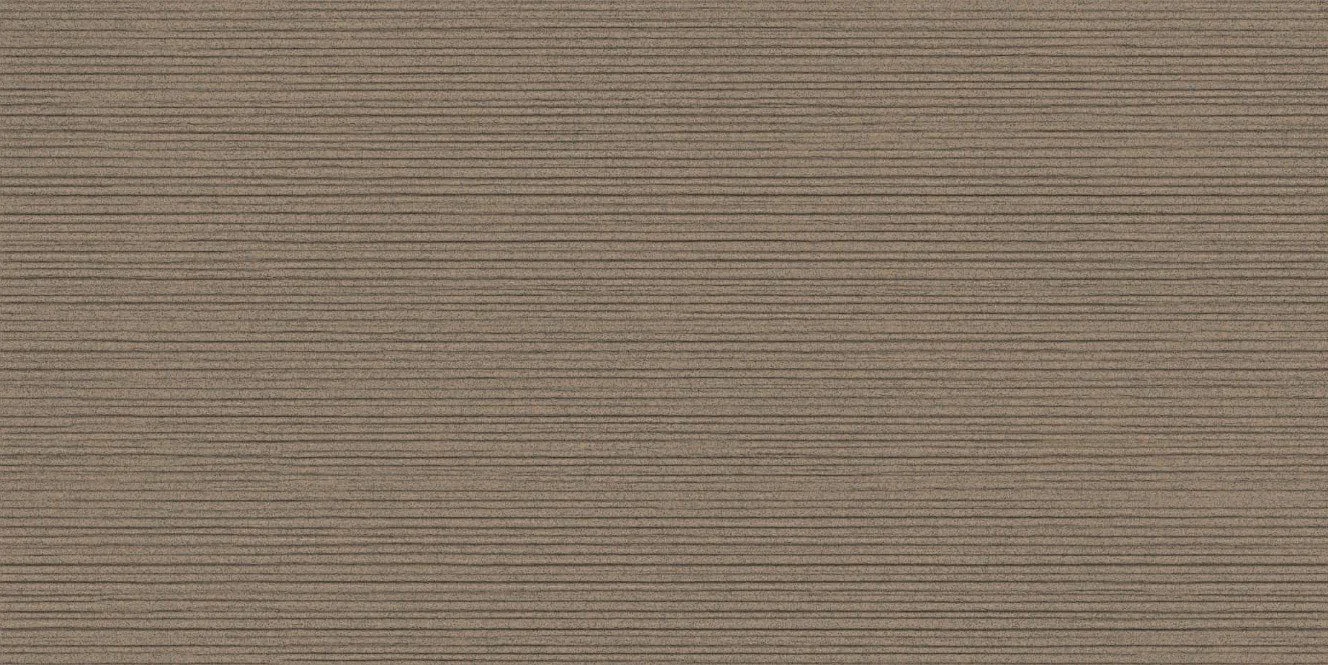 Marfil Linea Mashroom tile
Marfil Linea Mashroom, a 600 × 1200 mm tile, the size used in the example above.
Questions people ask
How much extra tile should I buy?
About 10% for a straight layout, 15% for diagonal and 15 to 20% for herringbone, rounded up to whole boxes. Large tiles and awkward rooms need more. These are rules of thumb, not a maker’s specification.
How many 600 × 1200 mm tiles for 20 m²?
Each tile is 0.72 m². A straight layout with 10% extra needs 22 m², and 22 ÷ 0.72 = 30.6, so 31 tiles. A diagonal layout at 15% needs 23 m², which is 32 tiles. Round up to whole boxes.
Should I keep spare tiles?
Yes. Keep a few from the same batch in a dry place. Repairs years later are easy with the same shade, and a range may be discontinued by then.
Sources
- Flooring Clarity: how much extra tile for a herringbone pattern (herringbone 10 to 20%; straight 5 to 10%; diagonal 15 to 25%)
- Flooring Clarity: how much extra tile to buy for a project (diagonal and herringbone about 15%)
- Tile Mountain: how many tiles do I need (order by the box, round up)
- CLE Tile: how much extra tile to buy (spares of 5 to 10%)
- House of Ceramic catalogue, 14 November 2026 (Marfil Linea Mashroom, 600 × 1200 mm)