The short answer
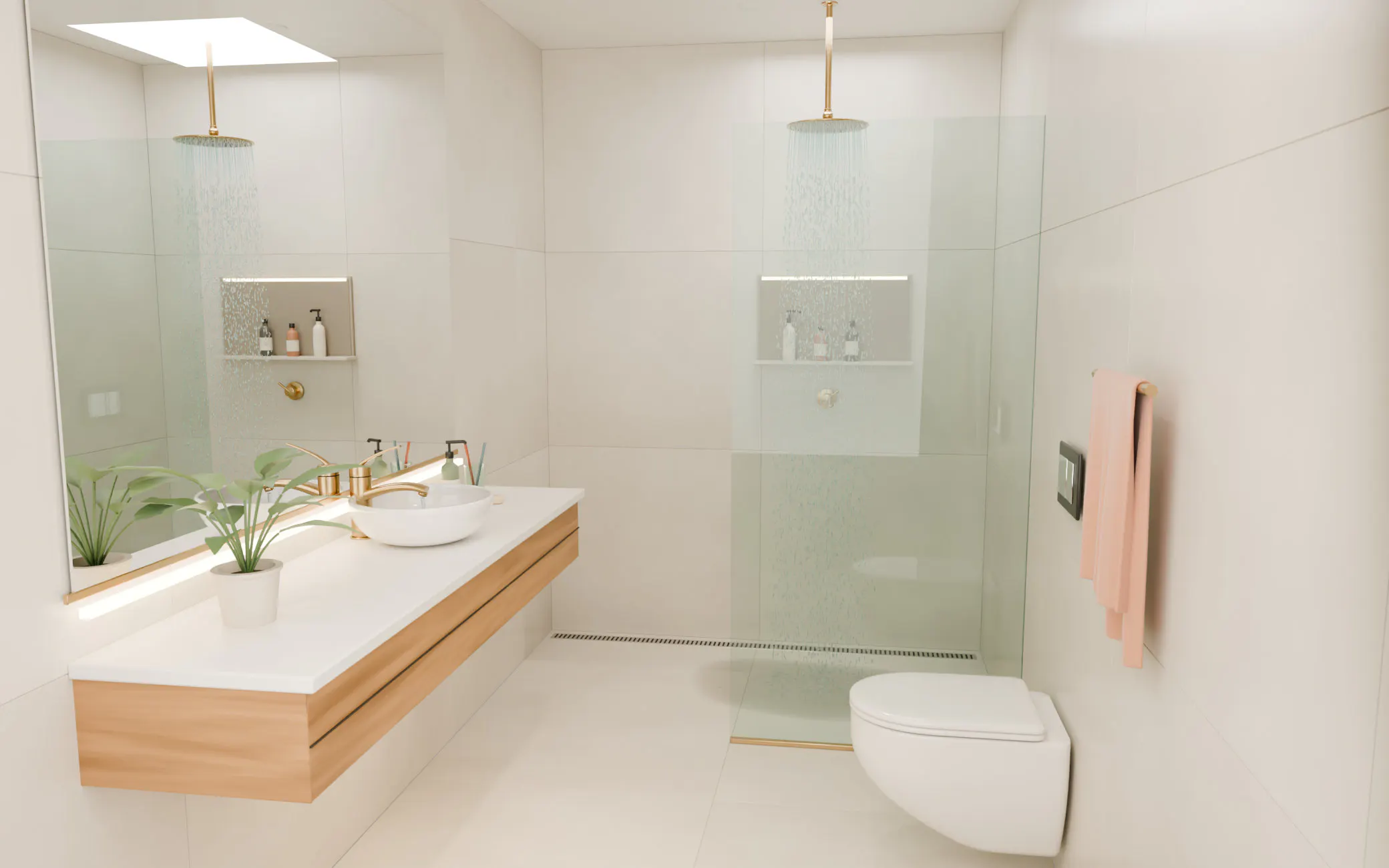
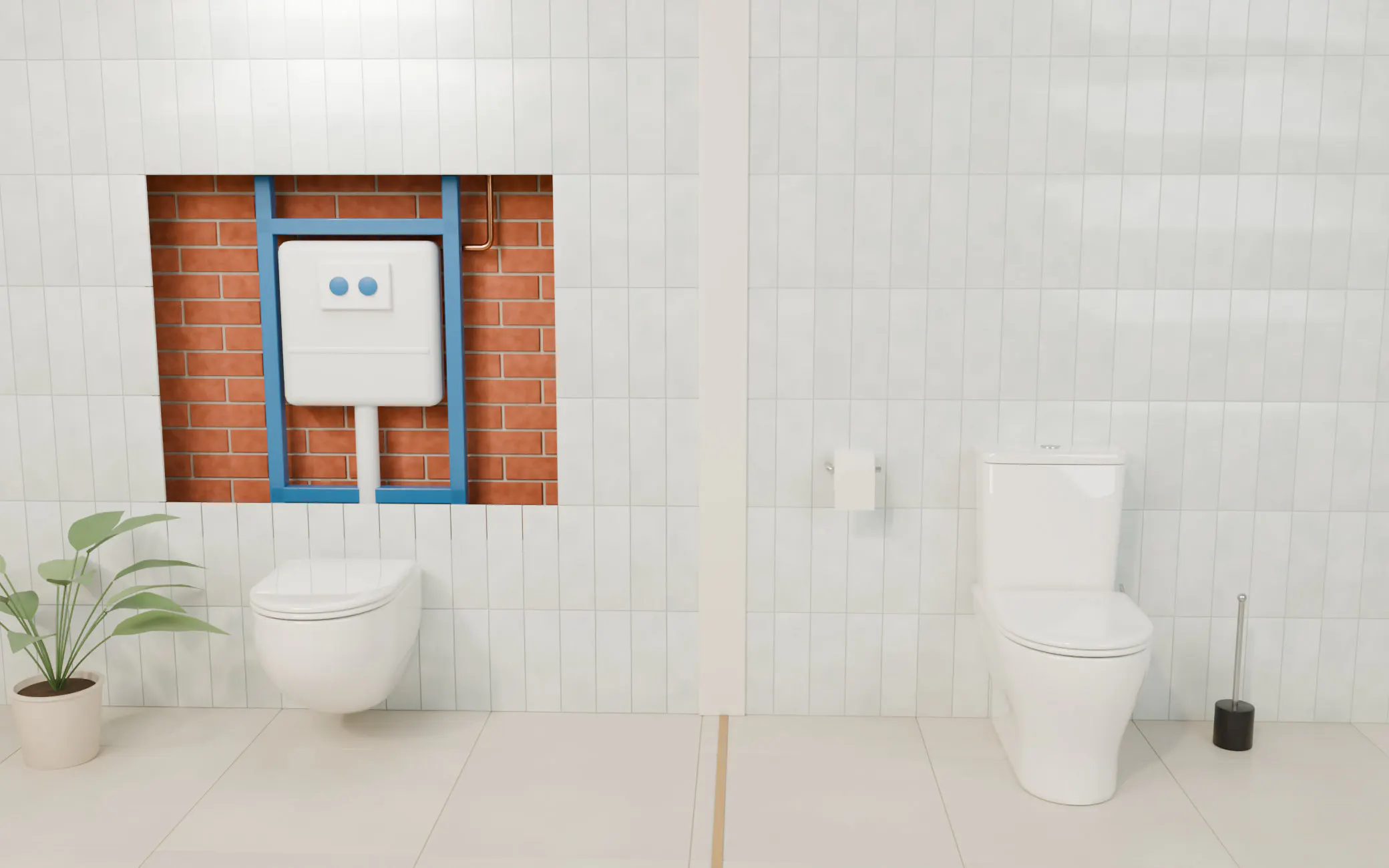
A wall-hung toilet hangs from a steel frame inside the wall, so the floor runs under it and the cistern is hidden. A floor-mounted toilet stands on the floor and is simpler to fit and repair. Choose before tiling, because the frame goes in first.
- 01Choose wall-hung for a clear, easy-to-mop floor and a tidy wall. Choose floor-mounted for a quick swap or when the wall will stay closed.
- 02The strength is in the frame. GROHE and Jaquar both list frames for 400 kg.
- 03A wall-hung toilet cannot be added to a finished wall without breaking tiles.
- 04A hidden cistern is repaired through the flush plate, so the opening must stay clear.
The question is not which is smarter. It is whether you want a floor you can mop in one sweep, and whether you will open the wall to get it.
What do you see in each?
Clear floor
Wall-hung
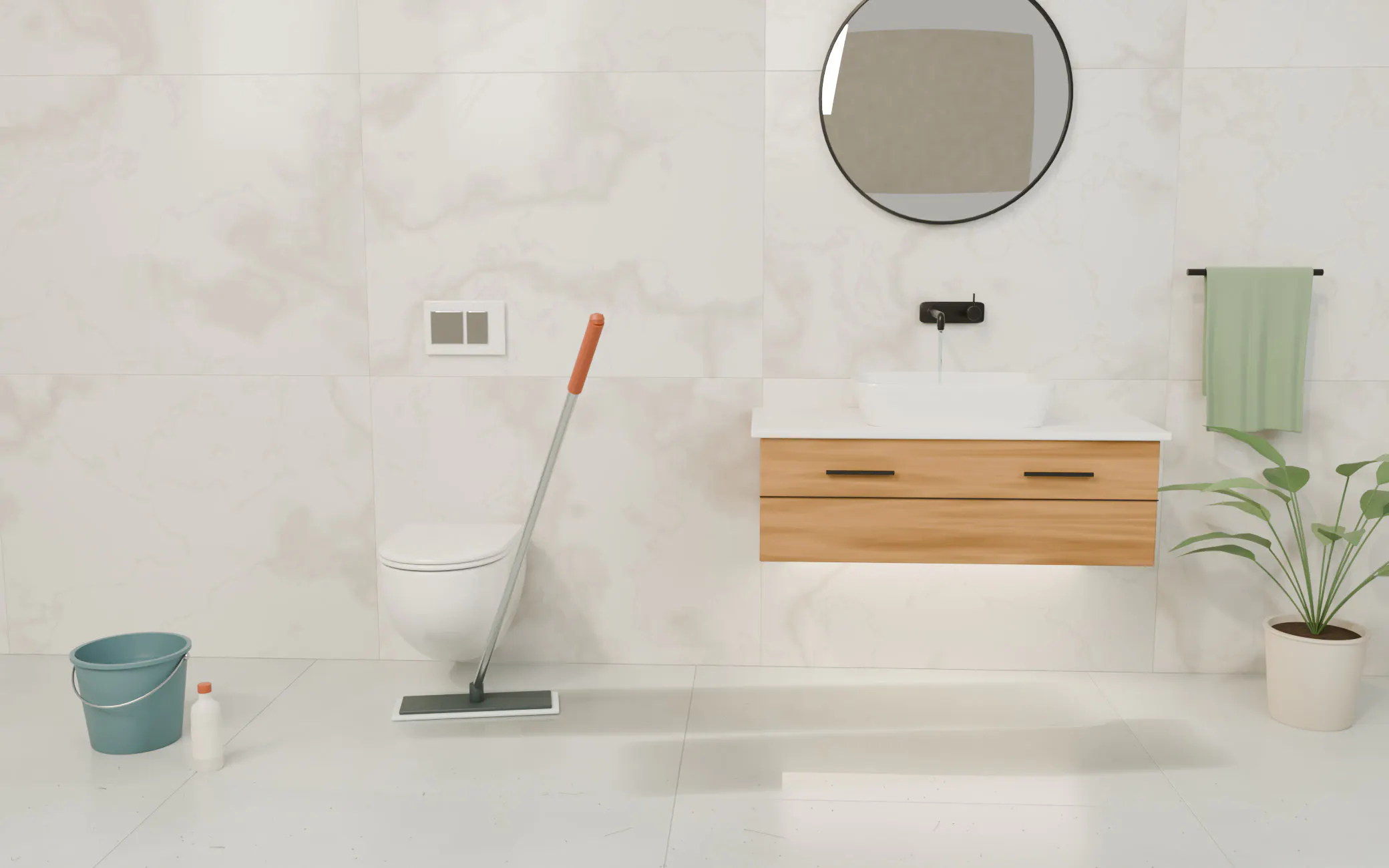
- The floor runs under the bowl, so a mop passes beneath
- The cistern is hidden behind a plate
- Frames are rated for 400 kg
- Needs a frame, wall work and planning before tiling
- Service is through the flush plate opening
Best forNew homes and full bathroom renovations.
Simple
Floor-mounted
- Easy to fit and to replace
- Parts are easy to reach
- Works on most existing floors
- The base meets the floor, where dirt collects
- A visible tank, unless a concealed cistern is used
Best forQuick swaps and bathrooms where the walls stay closed.
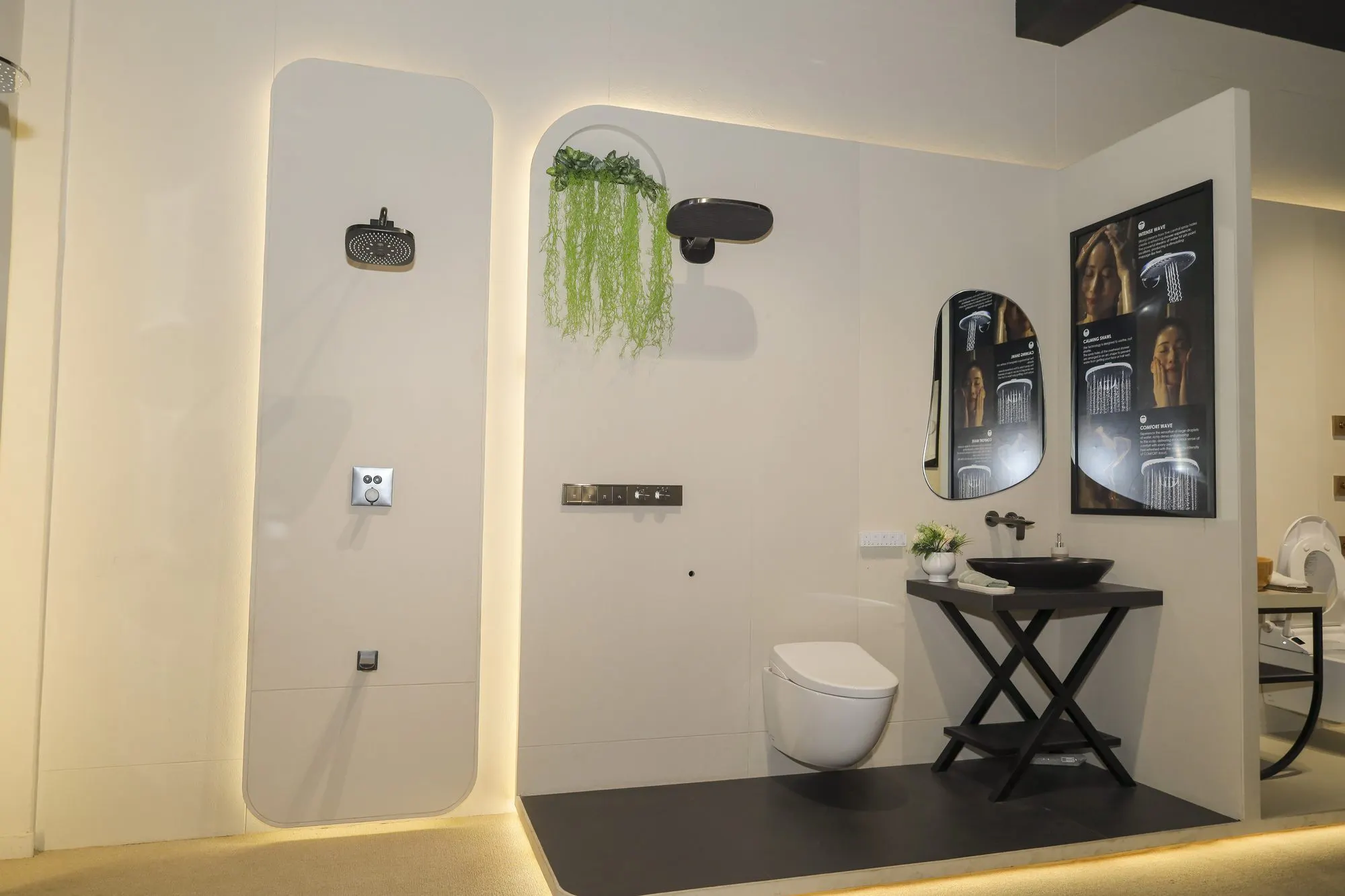
Sit on both kinds at the showroom before you decide.
Is a wall-hung toilet strong enough?
Yes, when it is fitted as the maker says. The weight is carried by the steel frame, not the tiles. GROHE’s Rapid SL frame lists a 400 kg load, and Jaquar says its frames support up to 400 kg. The wall around the frame matters, so a loose partition needs the frame fixed to the structure.
Which is easier to clean and to repair?
Cleaning favours wall-hung. The floor runs under the bowl, so one pass of the mop covers it, and there is no joint at the base to scrub. Jaquar says the smooth surface of its rimless bowls can be cleaned in minutes. Repair favours floor-mounted, since you can reach the parts directly. With a hidden cistern, the plumber works through the flush plate opening, which is why that opening must stay clear.
What has to be settled before tiling?
Choose the bowl and frame together
The bowl’s fixing must suit the frame.
Fix the frame height
Frames come in set heights, such as 1.13 m or 0.82 m for GROHE. The short ones suit a low wall, such as under a window.
Set the drain and water points
Both are placed before any tile goes on the wall.
Leave the flush plate opening clear
The cistern is serviced through the flush plate opening, so no tile may cover it.
Tile, then hang the bowl
The bowl and plate go on last.
See these at the showroom
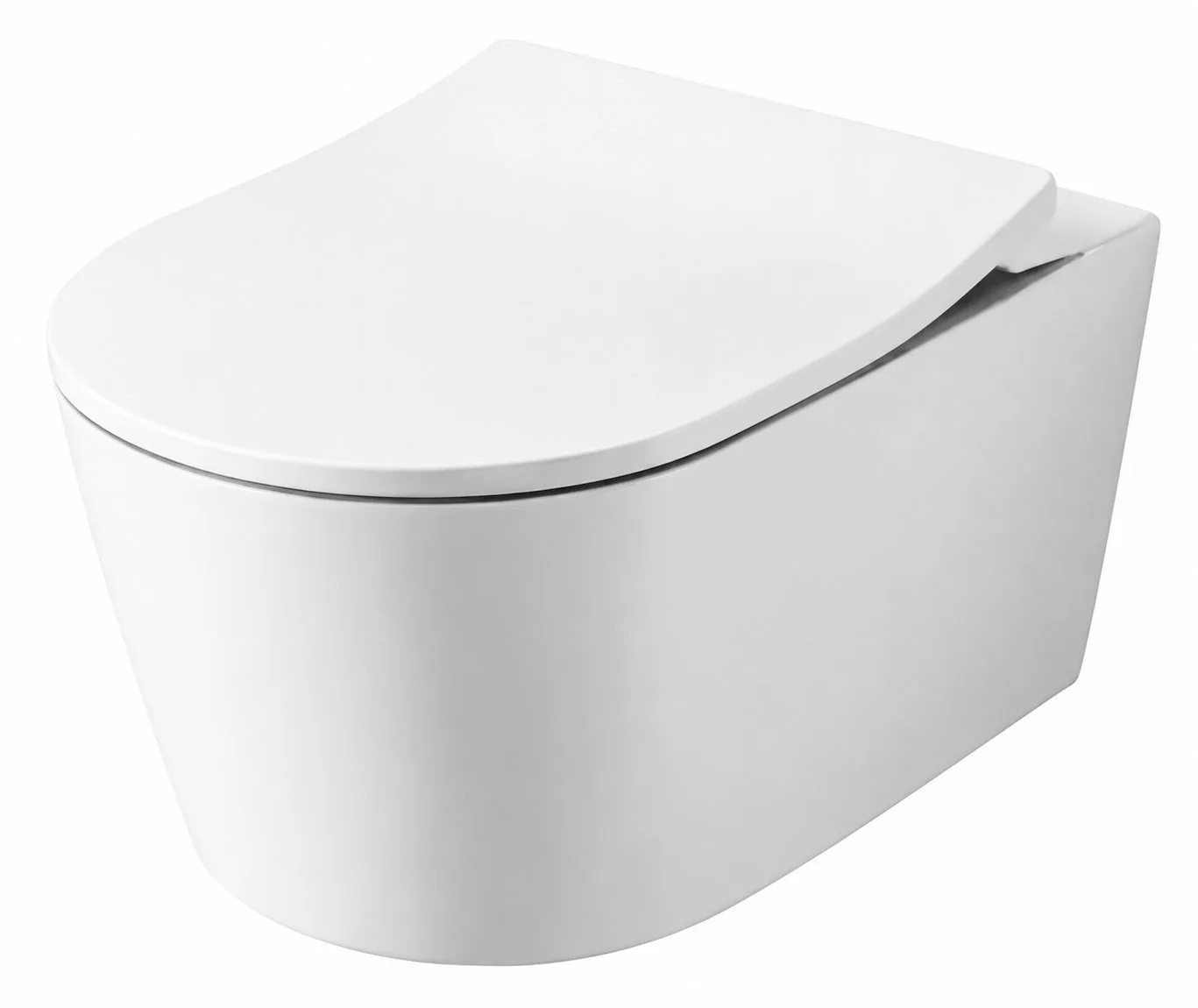 TOTO CW542 wall-hung water closet
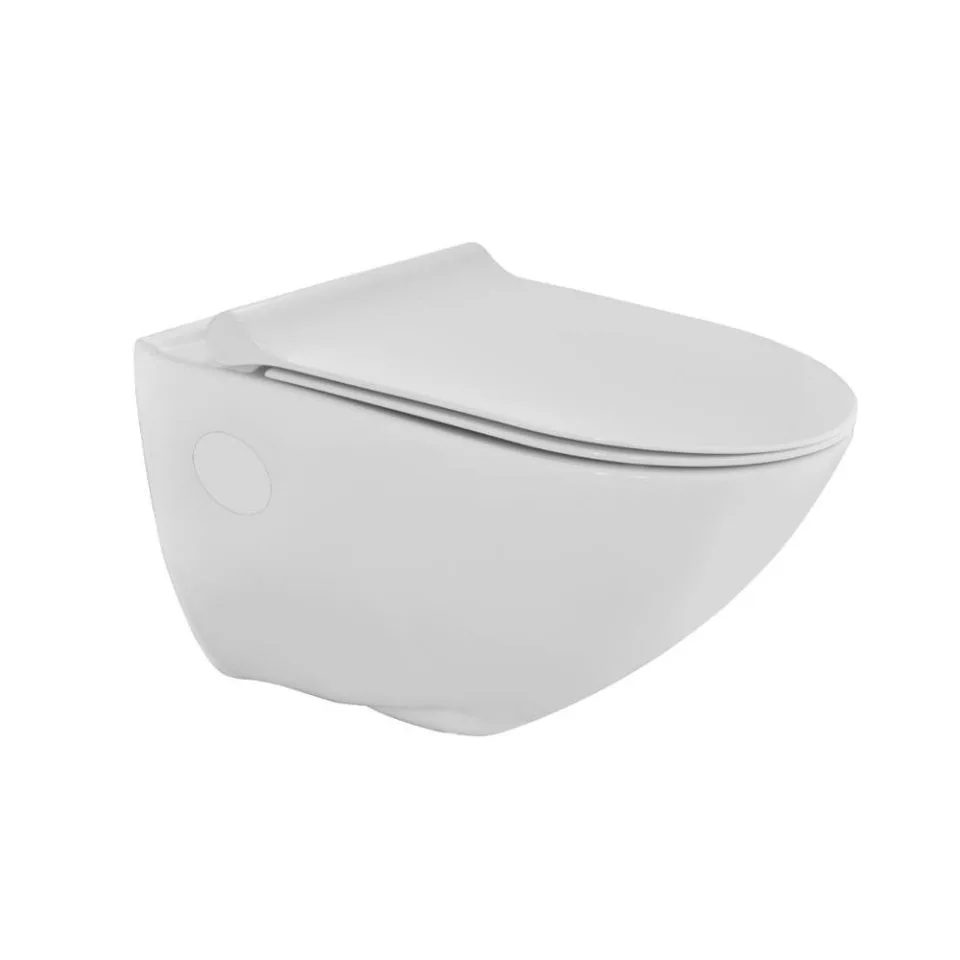 Jaquar CNS-WHT-963UFSM Rimless Wall Hung
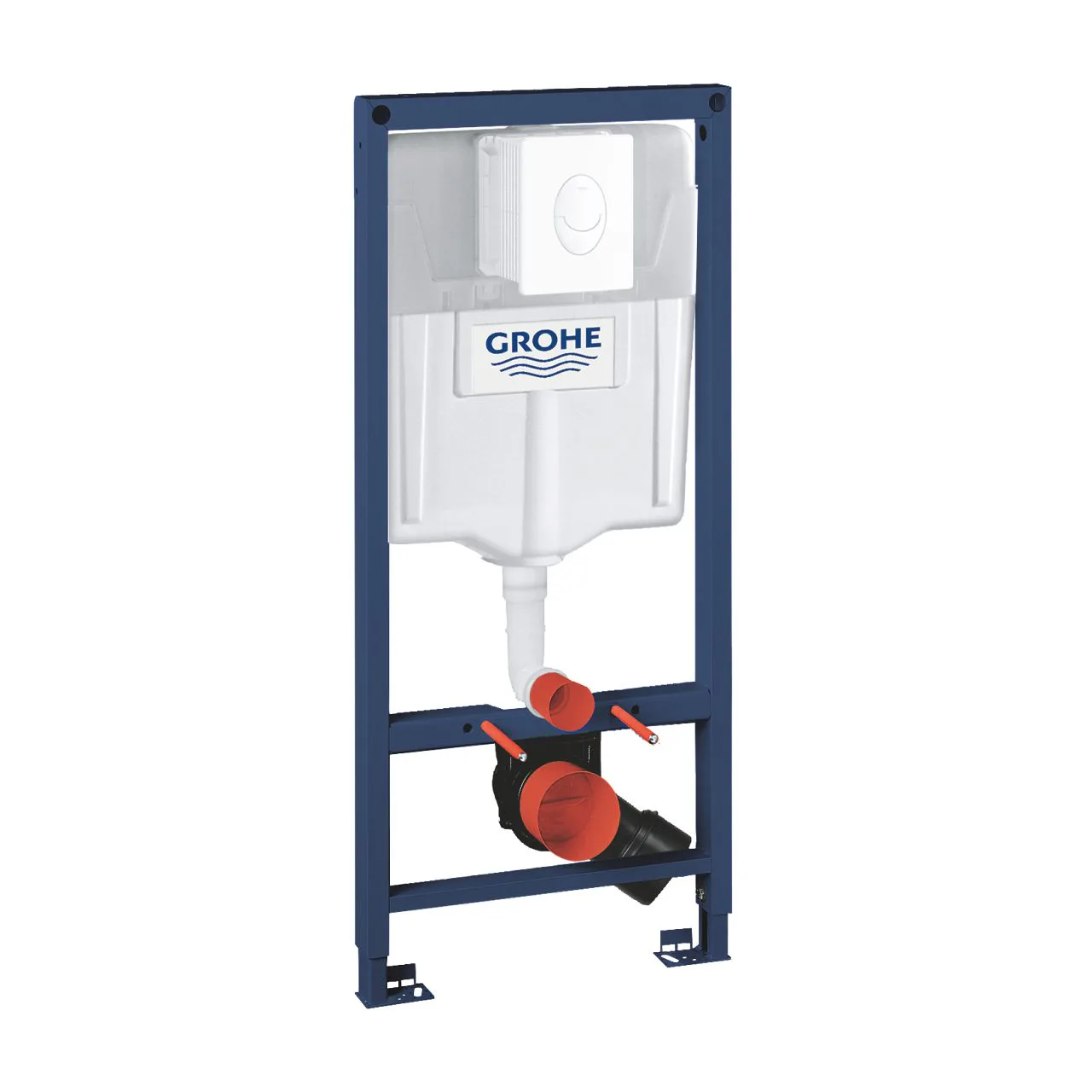 GROHE Rapid SL 2IN1 WC 1,13M
Wall-hung bowls and the parts that hide behind them, from our catalogue.
Questions people ask
Is a wall-hung toilet better than a floor-mounted one?
Neither is better for every home. Wall-hung is easier to mop under and looks cleaner, but needs a frame and early planning. Floor-mounted is simpler to fit and repair. Decide before tiling.
How much weight can a wall-hung toilet take?
GROHE’s Rapid SL frame is rated for 400 kg when fitted as instructed. Jaquar says its frames take up to 400 kg. Check the sheet for the frame you buy.
Can I fit a wall-hung toilet on an existing wall?
Not directly. It needs a frame and cistern built into or against the wall. In a finished bathroom that usually means breaking tiles, so it suits new builds and renovations best.
How do I repair a hidden cistern?
Through the flush plate: the plate comes off and the cistern is behind it. Keep the plate opening clear of tile and keep the model drawing, so the plumber knows what sits behind.